This is a repeating event- Event 3 / 55 September 2023 5:00 pm19 September 2023 5:00 pm
THE SOUND AND THE FURY BY WILLIAM FAULKNER
Event Details
“I seemed to be lying neither asleep nor awake looking down a long corridor of gray half light where all stable things had become shadowy paradoxical all I had done shadows all I had felt suffered taking visible form antic and perverse mocking without relevance inherent themselves with the denial of the significance they should have affirmed thinking I was I was not who was not was not who.”
William Faulkner, The Sound and the Fury
In William Faulkner’s first truly modernist work, he attempts to break through the confines of time and sequence to get at the essence of human nature. As Malcolm Bradbury explains, “Faulkner’s preoccupation with time has to do with the endless interlocking of personal and public histories and with the relation of the past to the lost, chaotic present.” The Sound and the Fury exposes a crumbling world through inference and allusion rather than through direct social critique. In the modernist method, Faulkner employs stream of consciousness and symbolism as connecting fibres against individual interior realities that must compete for authority.
This study will draw upon participants’ questions and ideas to shed light on this complex text. The book is richer when discussed, enabling the first time reader access to Faulkner’s vision, while those re-reading will find greater depth and resonance. Upon a first reading, the narratives appear jumbled and opaque; but as the pieces start to fit together, the complex and careful planning that Faulkner employs becomes apparent. Does the work expose the depths and hidden realms of the human spirit? This is what we must grapple with in our study.
SALON DETAILS
- Facilitated by Toby Brothers
- Tuesday evenings 5.00 – 7.00 pm, virtual meetings on Zoom
- Five-meeting study 29 August – 26 September 2023
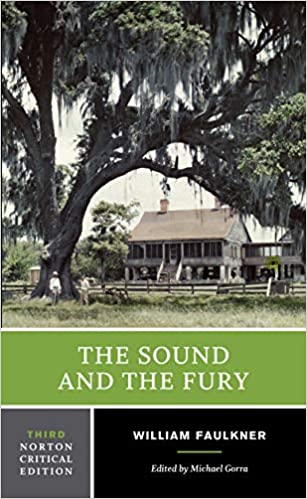
- Recommended edition: The Sound and the Fury by William Faulkner, Norton Critical Edition (edited by Michael Gorra); ISBN-13: 978-0393912692
- £150 for five sessions