What’s on?
Salon calendar & booking
Go to Booking Now! for a one-stop shop with links to studies available to book now.
Please find below a list of Salon studies already running (or completed earlier this month) and those coming soon. Click any listing for more information, including online booking details and cost where places are still available to book. Unless otherwise indicated, all studies are virtual and conducted online on Zoom (which is free to use for participants). You can also view our Study Calendar with dates of all sessions month-by-month.
We post Salon studies throughout the year, typically eight weeks before the start date. For updates on what’s coming up please subscribe to our free newsletter and check this site regularly. On our Archive page you can browse a list of past Salons and you are welcome to contact us to suggest new studies you would be interested to see or past studies you would like us to offer again.
Please see our Terms & Conditions here.
October 2026
Event Details
We have a well-established Salon tradition of spending some time each autumn on the Cornish coast
Event Details
We have a well-established Salon tradition of spending some time each autumn on the Cornish coast reading Virginia Woolf’s work and enjoying one of the places she loved and in which she spent significant parts of her childhood. This year we are again offering two Woolf studies in St Ives: To the Lighthouse from 26 to 29 September (when we will also celebrate the approaching centenary of the first publication of the book in May 1927) and The Waves from 1 to 4 October 2026.
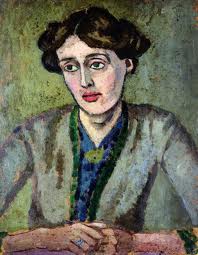
Woolf’s reputation as one of the key members of the celebrated Bloomsbury Group, means that many see her primarily as a London writer, yet the Cornish coastal town of St Ives – where she spent many childhood summers – serves as a prism through which we can explore her perspectives on landscape, domesticity and identity.
“Thus when I come to shape here at this table between my hands the story of my life and set it before you as a complete thing, I have to recall things gone far, gone deep, sunk into this life or that and become part of it; dreams, too, things surrounding me, and the inmates, those old half-articulate ghosts who keep up their hauntings by day and night; who turn over in their sleep, who utter their confused cries, who put out their phantom fingers and clutch at me as I try to escape—shadows of people one might have been; unborn selves.”Virginia Woolf, The Waves
Reading Virginia Woolf requires a release of the faculty we have so carefully trained to be grounded in time and fact. Her fluid and probing prose allows such a deep and troubling glimpse into the human heart that one comes away wiser and broader than before. This is not my first floating into The Waves, what I have already experienced makes me want to swim far out into her embracing world of character and reflection.
We invite you to join us in St Ives to explore this lovely place and share the work with a group of other keen minds.
I love this review of The Waves from Goodreads:
‘My umpteenth reading of The Waves and it still floors me. There’s not a wasted word here: Woolf’s attention to rhythm—she was listening to Beethoven’s String Quartet in B-flat Minor, Opus 130 while writing this novel, and Beethoven’s nuances are found in her prose at all turns—and the ways in which she questions subjectivity, interpersonal relations, the ways in which we are connected and yet disparate from those around us are on display here more so than in any of her other fictional works.
‘The last section is sadly not as famous as the last section in Joyce’s Ulysses, but it may well be even more gut-wrenchingly brutal in its philosophical underpinnings and the ways in which Woolf engages with poetics to sustain the flow of her inquiries into what it means to be human. On each reading there is something more to be found here, something more to be learned, something to relish and treasure, some keen diamond-edged truth that slices just as much as it illuminates.’
During our visit you will have opportunities to visit the iconic Tate St Ives gallery overlooking the Atlantic Ocean, built between 1988 and 1993 on the site of an old gasworks, and the Barbara Hepworth Museum & Sculpture Garden. If weather allows, there will be an optional boat trip to Godrevy Lighthouse and we also hope to look at Talland House, Woolf’s childhood summer home (now privately owned). Until Virginia’s mother, Julia Stephen, died in 1895, the elegant house overlooking St Ives Bay would be the Stephens’ family home for several months of each year. Although the complete family never returned to St Ives after their mother’s death, her children travelled back in 1905 following the death of their father in the previous year.
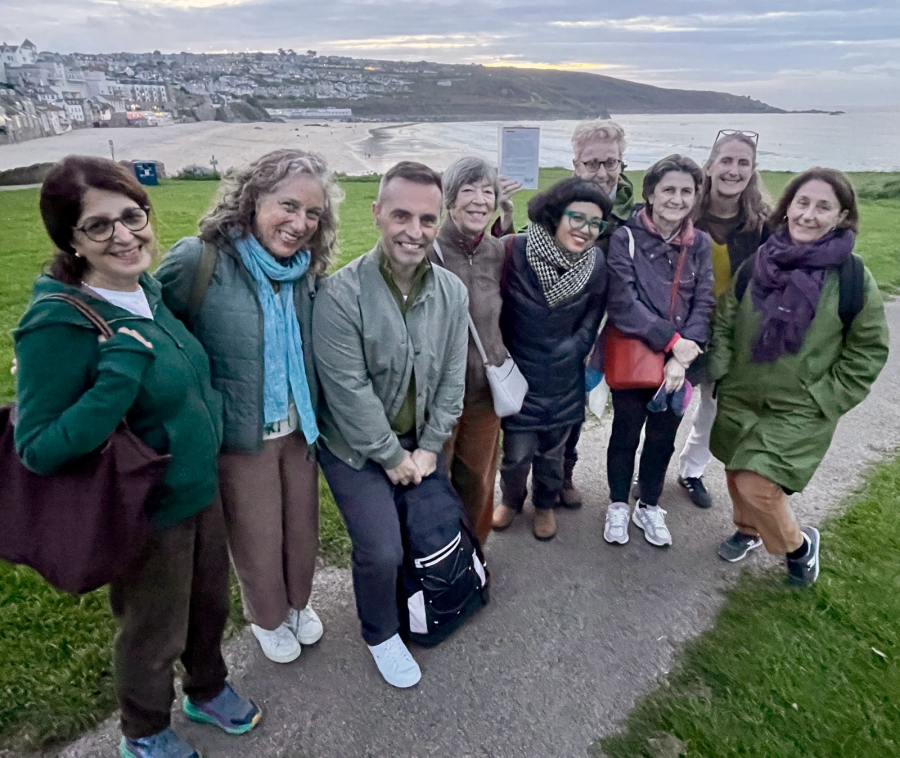
Feedback from participants in previous St Ives studies:
“The studio where the discussion took place is a beautiful, extraordinary place, the participants were imbued with the light and landscape, creating a friendly and committed atmosphere. The two facilitators were wonderful . . .”
“The collaboration between participants and facilitators was rich indeed, and I wonder how it was accomplished that everyone in the group was so insightful and intelligent and I might even say soul-searching . . . I also think it was just a superb group of people.”

Read Salonista Leah Jewett’s account of a Salon Study in St Ives here.
JOINING DETAILS:
- The cost of the study is £600. Please use the form below to secure your place with an initial registration deposit of £60.00. Once you have registered we will then send you details for payment of the balance owing (£540.00) to complete your booking by bank transfer.
- Facilitated by Toby Brothers and Sarah Snoxall
- Our meetings will take place in the fabulous Porthmeor Studios
- 1 to 4 October 2026 (this will enable approximately 14 hours of study)
- Recommended editions: The Waves by Virginia Woolf, Vintage Classics, ISBN-13:
978-1784870843 or Penguin Classics, ISBN-13: 978-0241372081 - The cost of £600 covers facilitation, notes and critical resources (N.B. travel, food and accommodation are NOT included and participants are responsible for arranging their own travel, accommodation and insurance).
- We recommend booking your accommodation at the earliest opportunity. Places where previous participants have enjoyed staying include No 4 St Ives, 3 Porthminster Terrace, Blue Sky, The Olive Branch, Rivendell and the Harbour View Hotel, there may also be options with Airbnb. PLEASE check web details and compare review sites before you book to make sure your needs will be met.
Time
Location
St Ives, Cornwall
Book this Salon
Booking deposit £60 to be paid on registration, the balance of £540 will be payable by end of July 2026.
Places are no longer available for this event
Event Details
Orestes Pursued by the Furies, John Singer Sargent, Public domain, via Wikimedia
Event Details
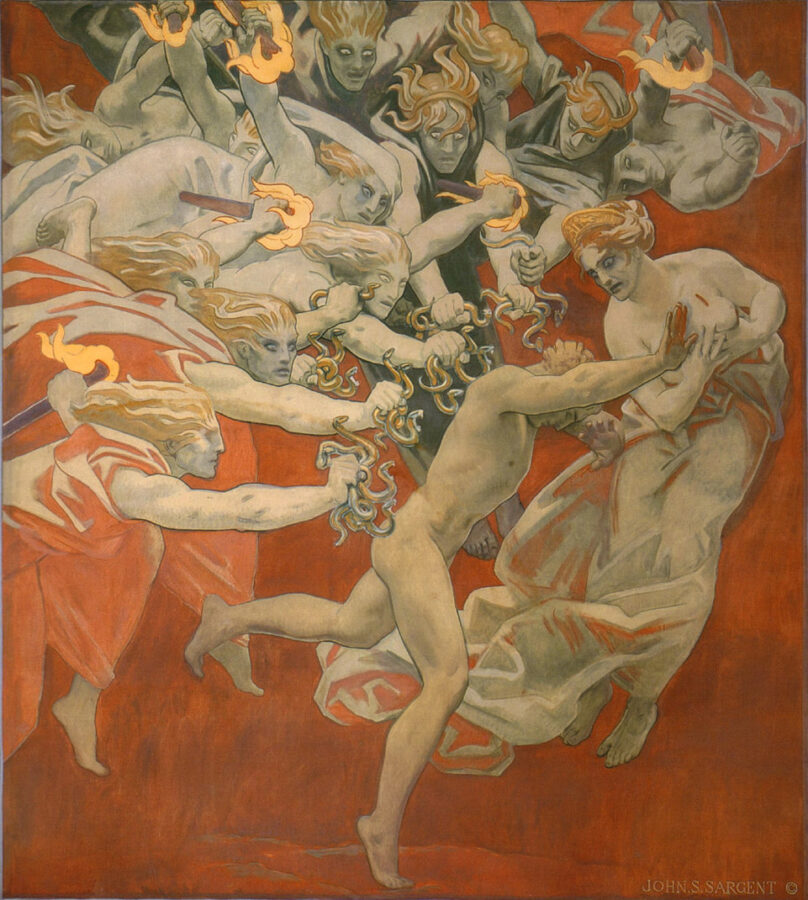
In the Oresteia trilogy Aeschylus addressed the bloody chain of murder and revenge within the House of Atreus, the royal family of Mycenae. One of the supreme productions of all literature, it deals with two great themes: the retribution of crime and the inheritance of evil.
The Oresteia is the only complete trilogy to have survived from Ancient Greece. Like The Odyssey it depicts the aftermath of the Trojan War and the homecoming of the fighters. In Agamemnon, a king’s decision to sacrifice his daughter and turn the tide of war inflicts lasting damage on his family, culminating in a terrible act of retribution. The Libation Bearers deals with the aftermath of Clytemnestra’s regicide, as her son Orestes sets out to avenge his father’s death. In The Eumenides, Orestes is tormented by supernatural powers that can never be appeased. Forming an elegant and subtle discourse on the emergence of Athenian democracy out of a period of chaos and destruction, the Oresteia is a compelling tragedy exploring the tensions between our obligations to our families and the laws that bind us together as a society.
To study these plays as a group is to experience both the familiarity and the strangeness of the ancient world. The plays that Athenians crowded into theatres to watch show people who are profoundly different to us in their outlook, but also startlingly like us in their conflicts and desires.
Translator Sarah Ruden is a writer, translator and classical scholar who brings a fresh and accessible approach to the Oresteia. Considered a leading interpreter of ancient literature, her publications include poetry, essays and an acclaimed biography of Virgil.
Praise for The Greek Plays:
“Mary Lefkowitz and James Romm deftly have gathered strong new translations from Frank Nisetich, Sarah Ruden, Rachel Kitzinger, Emily Wilson, as well as from Mary Lefkowitz and James Romm themselves. There is a freshness and pungency in these new translations that should last a long time. I admire also the introductions to the plays and the biographies and annotations provided. Closing essays by five distinguished classicists—the brilliant Daniel Mendelsohn and the equally skilled David Rosenbloom, Joshua Billings, Mary-Kay Gamel, and Gregory Hays—all enlightened me. This seems to me a helpful light into our gathering darkness.”
Harold Bloom
JOINING DETAILS:
- Seven two-hour meetings live on Zoom, from 5.30-7.30 pm (UK time) on consecutive Thursdays from 10 September to 22 October led by Susanna Taggart and Caroline Hammond
- Recommended edition: The Greek Plays- Sixteen Plays by Aeschylus, Sophocles and Euripides, Ballantine Books, ISBN: 978-0-8129-8309-8
- £280 for 7 meetings with two facilitators, to include opening notes and resources.
Time
Location
LIVE ON ZOOM
Future Event Times in this Repeating Event Series
Book this Salon
Places are no longer available for this event
Event Details
Gustave Doré, Dante’s Purgatorio, Public domain, via Wikimedia Commons
Event Details
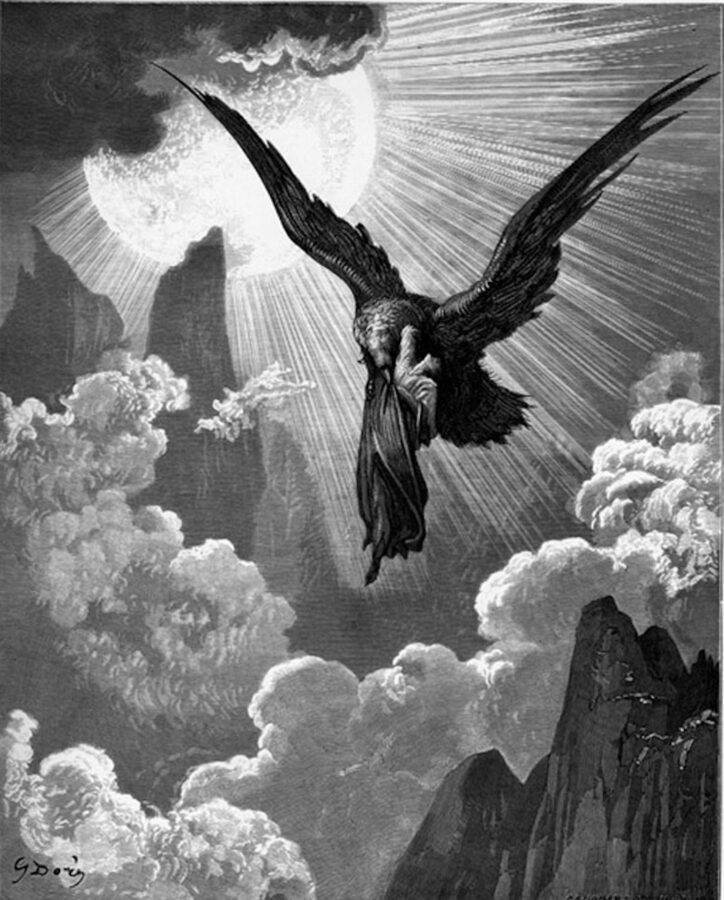
Dante’s epic journey through the afterlife continues in the Purgatorio. Here the poet explores self-transformation: How do we let go of pride, hatred, lust, jealousy and greed? How can we move from cruelty and to kindness, from sin to salvation?
Dante writes in the first person as a very human voyager, reacting with strong and varied emotions to the characters before him, just as the reader might. As we pass through an array of landscapes, each appropriate to the sins and purgations there, Dante undergoes a kind of transformation himself. And he challenges us to do the same.
You don’t need to have read Dante’s Inferno to join this study. Dante, like Joyce, is an ideal author for in-depth study at the LitSalon. The Divine Comedy has multiple meanings that provide rich material for discussion, weaving together myth, theology, history and the contemporary life of Dante’s time. We will explore Dante’s relationship with Virgil and Beatrice, and with several other vivid personalities he meets along his way.
According to T.S. Eliot, “The whole study and practice of Dante seems to me to teach that the poet should be the servant of his language, rather than the master of it.” Join us in reading one of the classics of world literature.
JOINING DETAILS:
- Eleven meeting study (on Zoom) led by Sean Forester
- Thursdays, 5.30-7.30 pm (UK time)
- 1, 8, 15, 22, 29 October; 5, 12, 19 November; 3, 10, 17 December 2026 (N.B. no meeting on 26 November, Thanksgiving)
- £440 for eleven two-hour meetings, to include opening notes and resources
- Recommended edition: Dante’s Purgatorio, translated by Jean Hollander & Robert Hollander, ISBN: 978-0385497008
Organizer
Time
Location
LIVE ON ZOOM
Future Event Times in this Repeating Event Series
Book this Salon
Places are no longer available for this event
Event Details
Event Details

Now more than ever it seems right to read Vladimir Nabokov’s masterpiece, Lolita (1955). The man who famously described himself as “an American writer, born in Russia” understands his adopted country as only an immigrant can.
Born into Russian nobility, Nabokov fled for his life twice: first escaping the 1917 Revolution for Berlin and Paris, and then, in 1940, fleeing Nazi-era Paris for New York City alongside his Jewish wife, Véra. A respected lepidopterist, Nabokov spent years working at the Harvard Museum of Comparative Zoology.
The immigrant, the scientist and the novelist brought all he knew about camouflage, metamorphosis, mimicry, migration and classification to his writing.
Lolita combines Nabokov’s keen observations of the new, post-World War II superpower that was late 1940s America with his scalpel-like dexterity with the English language.
One of the world’s most banned books? Yes.
A savage send-up of a country awash in Norman Rockwell imagery and pop psychology? A land where clueless elites become intellectually complicit in a world that infantilises adults while sexualising children? Yes.
Narrated through the notoriously unreliable perspective of one Humbert Humbert, aka Paedophile-in-Chief? Yes.
Hilarious and infuriating by turns, but always mesmerising? Yes.
JOINING DETAILS:
- Eight-meeting study led by Dr Nancy Goldstein
- 17 September – 5 November 2026
- Thursdays, 6.30-8.30 pm (UK time)
- £320 for eight two-hour meetings
- Recommended edition The Annotated Lolita (Penguin Modern Classics, 2000): ISBN: 978-0141185040
Organizer
Time
Location
LIVE ON ZOOM
Future Event Times in this Repeating Event Series
Book this Salon
Places are no longer available for this event
Event Details
Event Details

Absalom, Absalom! is arguably Faulkner’s most difficult, but also his most brilliant work. Eminent Faulkner critic and historian Fred Hobson (2003), like many others, claims that it is Faulkner’s masterwork, “not only because of the richness of its story . . . its tragic dimension, its prose, and its narrative complexity (The Sound and the Fury shares these, after all) but also because of its keen historical sense. Absalom is the Faulkner novel that deals . . . most centrally with what C. Vann Woodward calls ‘the burden of southern history’—that is, the racial burden—and it is a work that paints in many particulars, a realistic picture of antebellum life in the Deep South and explores the origins and the meaning of ‘aristocracy’ in that region. In no other Faulkner novel, perhaps no American novel, are all elements of that critical triumvirate, race, class, and gender, explored so compellingly”.
Absalom, Absalom tells the story of Thomas Sutpen, a brooding and enigmatic stranger who comes to fictional Jefferson in the early 1830’s with a wagon load of enslaved Haitians and a French architect from New Orleans to wrest his mansion out of the muddy bottoms of the north Mississippi wilderness, to sculpt it into an aristocratic bastion of power and to engender a dynasty through the force of his sheer will. Faulkner says that Sutpen was a man “who wanted sons and the sons destroyed him”—true–but Sutpen is both the progenitor and the author of his own downfall through a curious combination of sheer innocence, blind pride, and moral bankruptcy.
Coming back to Absalom, Absalom! after many years feels like returning to a haunted house you once loved. The place is still there, echoing with monstrous voices, still as impressive and unlivable as ever! While Absalom, Absalom is one of Faulkner’s most Gothic novels, Faulkner’s gift is to wed that genre’s ghostly, claustrophobic intensity to modernist formal experimentation, his technical innovations (shifting perspectives, fragmented chronology, intricate, lyrical prose, etc.) adding to the oppressive emotional weight of an intergenerational past which suffuses the present.
Deborah Robbins (1981) explains that for the characters in Absalom, Absalom, telling is a matter of life and death: “[T]he narrators speak with the desperate eloquence of people who fear the interruption of a story they must tell, a story of great personal significance. Each shapes the Sutpen material to a pattern reflecting the teller’s own idiosyncratic vision, hoping to win confirmation of the identity defined by that ordering of experience. But while Miss Rosa, Mr. Compson, Shreve and Quentin all seek witnesses to their self-creation in the stories they tell, all resist the self-effacing passivity of listening. To assume the role of teller is to make a claim to identity, while to surrender that claim is a small death. Thus, the right to tell is repeatedly challenged and usurped in the novel as the narrators compete for the instrument of self assertion”.
So where does that leave us—the readers? Do we surrender to the tale or do we compete (or collaborate?) with its narrators in a search for meaning: Duncan Aswell (1968) claims that Faulkner’s “daring and brilliant strategy in Absalom, Absalom! is to divide us against ourselves, our emotional against our intellectual responses, by providing us with continually more irresistible and subtle rhetorical arguments until we forget what we have been asked to take on faith and what we can safely accept as known and proven. Faulkner plays upon precisely those needs and desires in us that he shows operating in his characters, and demonstrates the truth of his fable by making us equally blind and hopeful participants in the search for illumination”.
Please join us as we compete and collaborate with some of literature’s most famous narrators in unraveling the mysteries of this spellbinding classic!
JOINING DETAILS:
- Seven-week study led by John Allemand and Deborah Lawunmi live on Zoom
- Mondays, 28 September – 9 November 2026, 5.00-7.30 pm (UK time)
- £350 for seven meeting study with two facilitators (17.5 hours)
- Recommended edition: Absalom, Absalom!, Norton Critical Edition (2023), edited by Susan Scott Parrish, ISBN-10: 0393422585, ISBN-13: 978-0393422580.
REDUCED COSTS: we are committed to making our studies as affordable as possible. We have a fund in place to support anyone who would like to register for a study but finds the cost difficult to afford. We can’t promise to help, but please email litsalon@gmail.com in confidence if you would like to request a reduction in the cost of a study.
Time
Location
LIVE ON ZOOM
Future Event Times in this Repeating Event Series
Book this Salon
Places are no longer available for this event
Event Details
William Blake, Public domain, via Wikimedia Commons
Event Details
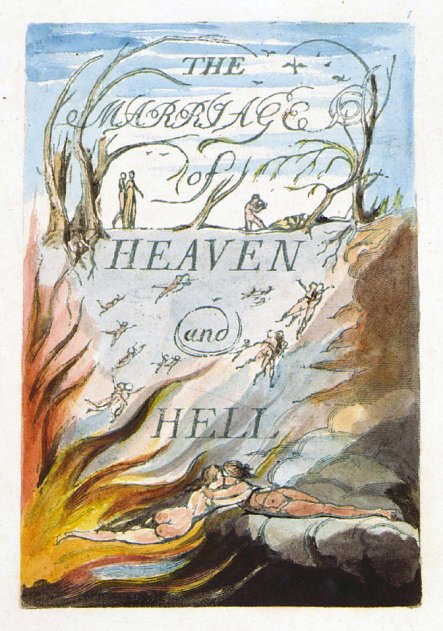
William Blake expressed his radical vision through illuminated books that combine poetry and art. We’ll study selections from some of his powerful early poems: Songs of Innocence and Experience, The Auguries of Innocence and The Marriage of Heaven and Hell. While Blake’s poetry stands on its own and requires no background knowledge, encountering him is especially interesting after reading Dante or Milton. So, this study would be a fine next chapter for those who have previously studied Paradise Lost or The Divine Comedy with the LitSalon. You can view some of Blake’s art and poetry here.
JOINING DETAILS:
- Five meeting study led by Sean Forester
- Mondays, 6.00 – 8.00 pm (UK time), 7, 14, 21, 28 September and 5 October
- Please purchase facsimile editions of Songs of Innocence and Experience and The Marriage of Heaven and Hell with Blake’s illuminated manuscripts in full colour. The texts are also available free online at the Blake Archive.
- £200 for five two-hour meetings
Organizer
Time
Location
LIVE ON ZOOM
Book this Salon
Places are no longer available for this event
Event Details
Event Details
Thomas Mann’s 1924 novel The Magic Mountain is often grouped with two other giant literary classics, James Joyce’s Ulysses and Proust’s Remembrance of Things Past. Together these works are seen as the formative novels of the Modernist era.
A first dip into the text of The Magic Mountain reveals an accessible, lilting narrative in which readers soon find themselves considering time, society, passion and memory from the particular perspective of an invalid needing medical care in an environment far removed from regular life. But we are not concerned solely with the beauty of the prose, but about the power and seduction of the realm of the mind.
Unlike some books we study in the Salon, the challenge of reading The Magic Mountain lies not just in decoding and teasing out the themes, patterns and narrative play (although we do have a VERY playful narrator), but in grasping mountainous ideas: philosophies, paradigms and approaches to constructing our lives in purposeful ways. Do we aim for the purity of transcendent music? Do we indulge in the decadence of the senses when we recognise the limits of time? Do we try to catalogue suffering and thus reveal the beautiful rationality of humankind and our ability to overcome the pain of living? All this is considered from the rarefied perspective of this mountain retreat, a Swiss Sanatorium on the verge of the First World War.
Often funny, occasionally erotic, moments of the fantastical clash with the absurd, feasts, suicides, seances and war . . . it is a packed book that is also deeply political. Written between the First and Second World Wars, The Magic Mountain engages with questions of nationalism and nostalgia, with the shadow of future events shifting the weight of the ironic stance that Mann assumes.
A little knowledge of some of the German and Austrian thinkers whose fingerprints can be found in the pages – Nietzsche, Schopenhauer, Freud, Heidegger – can be helpful but is not necessary for a thoroughly satisfying read. During the course of this study we will invite Keith Fosbrook to share a little of his expertise in this area with the group.
JOINING DETAILS:
- Thirteen week study, live on Zoom, led by Toby Brothers and Sarah Snoxall with additional contribution from Keith Fosbrook.
- Tuesdays, 12.00-2.00 pm (UK time), 22 September – 15 December 2026 (except for the second meeting in the series which will be from 12.00-2.00 pm on Wednesday 30 September).
- We are also offering a later study (on Tuesdays only) from 22 September – 15 December 2026, 5.30-7.30 pm.
- Recommended editions (2): The Magic Mountain by Thomas Mann, translated by John E. Woods, Vintage, ISBN-13: 978-0679772873 OR Everyman, ISBN-13: 978-1857152890.
- £490 for thirteen-week study.
REDUCED COSTS: we are committed to making our studies as affordable as possible. We have a fund in place to support anyone who would like to register for a study but finds the cost difficult to afford. We can’t promise to help, but please email us at litsalon@gmail.com in confidence if you would like to request a reduction in the cost of a study.
Time
Location
LIVE ON ZOOM
Future Event Times in this Repeating Event Series
Book this Salon
Places are no longer available for this event
Event Details
Photo by Mark Casey on Unsplash
Event Details

“But what is more to the point is my belief that the habit of writing thus for my own eye only is good practice. It loosens the ligaments. Never mind the misses and the stumbles. Going at such a pace as I do I must make the most direct and instant shots at my object, and thus have to lay hands on words, choose them and shoot them with no more pause than is needed to put my pen in the ink.”
Virginia Woolf, A Writer’s Diary
An invitation to writers of all levels (beginners are as welcome as the more experienced) — to loosen the ligaments, put perfection aside, and write for the quiet joy of discovery; to share a space where words unfold boldly, imperfectly, and in response to curiosity.
Rooted in the ethos of the London Literary Salon — where close reading and conversation open pathways to deeper understanding — this writing series, facilitated by Alison Cable, extends the same spirit of inquiry into creative practice. An invitation to explore writing as a way of thinking, feeling, and knowing.
Each block of three months offers a gentle rhythm of practice: a facilitated Anchor Session followed later in the month by a companion Open Writing Session, where you can return to your work, deepen the ideas sparked in the workshop, and write alongside others in quiet company.
How it works
- Anchor Session (first Tuesday of each month, 5.00-7.00 pm, UK time):
A guided workshop exploring a theme, text, or prompt through discussion, short exercises and optional sharing. These sessions provide inspiration and direction for your writing practice. - Open Writing Session (third Tuesday of each month, 5:00–6:30 pm, UK time):
A lightly held, communal writing space in which you can develop your ideas, try new forms, or simply write in the company of others. Optional check-in and sharing at the end. - Block Pass: £105 for three months (includes three Anchor Sessions and three companion Open Writing Sessions). This block encourages continuity and engagement, with sessions scheduled monthly to help you build a routine.
- Single Sessions: please enquire.
Block 1: January – March 2026
- Anchor: 6 January | 3 February | 3 March
- Open: 20 January | 17 February | 17 March
Block 2: April – June 2026
- Anchor: 7 April | 5 May | 2 June
- Open: 28 April | 19 May | 23 June
Block 3: July – September 2026
- Anchor: 7 July | 4 August | 1 September
- Open: 21 July | 18 August | 15 September
Block 4: October – December 2026
- Anchor: 6 October | 3 November | 1 December
- Open: 20 October | 17 November | 15 December
Organizer
Time
Location
LIVE ON ZOOM
Future Event Times in this Repeating Event Series
Book this Salon
Places are no longer available for this event
Event Details
Event Details
Thomas Mann’s 1924 novel The Magic Mountain is often grouped with two other giant literary classics, James Joyce’s Ulysses and Proust’s Remembrance of Things Past. Together these works are seen as the formative novels of the Modernist era.
A first dip into the text of The Magic Mountain reveals an accessible, lilting narrative in which readers soon find themselves considering time, society, passion and memory from the particular perspective of an invalid needing medical care in an environment far removed from regular life. But we are not concerned solely with the beauty of the prose, but about the power and seduction of the realm of the mind.
Unlike some books we study in the Salon, the challenge of reading The Magic Mountain lies not just in decoding and teasing out the themes, patterns and narrative play (although we do have a VERY playful narrator), but in grasping mountainous ideas: philosophies, paradigms and approaches to constructing our lives in purposeful ways. Do we aim for the purity of transcendent music? Do we indulge in the decadence of the senses when we recognise the limits of time? Do we try to catalogue suffering and thus reveal the beautiful rationality of humankind and our ability to overcome the pain of living? All this is considered from the rarefied perspective of this mountain retreat, a Swiss Sanatorium on the verge of the First World War.
Often funny, occasionally erotic, moments of the fantastical clash with the absurd, feasts, suicides, seances and war . . . it is a packed book that is also deeply political. Written between the First and Second World Wars, The Magic Mountain engages with questions of nationalism and nostalgia, with the shadow of future events shifting the weight of the ironic stance that Mann assumes.
A little knowledge of some of the German and Austrian thinkers whose fingerprints can be found in the pages – Nietzsche, Schopenhauer, Freud, Heidegger – can be helpful but is not necessary for a thoroughly satisfying read. During the course of this study we will invite Keith Fosbrook to share a little of his expertise in this area with the group.
JOINING DETAILS:
- Thirteen week study, live on Zoom, led by Toby Brothers and Sarah Snoxall with additional contribution from Keith Fosbrook.
- Tuesdays, 5.30-7.30 pm (UK time), 22 September – 15 December 2026. Please note that there is also an earlier study from 12.00 noon-2.00 pm (UK time) on the same dates.
- Recommended editions (2): The Magic Mountain by Thomas Mann, translated by John E. Woods, Vintage, ISBN-13: 978-0679772873 OR Everyman, ISBN-13: 978-1857152890.
- £490 for thirteen-week study.
REDUCED COSTS: we are committed to making our studies as affordable as possible. We have a fund in place to support anyone who would like to register for a study but finds the cost difficult to afford. We can’t promise to help, but please email us at litsalon@gmail.com in confidence if you would like to request a reduction in the cost of a study.
Time
Location
LIVE ON ZOOM
Future Event Times in this Repeating Event Series
Book this Salon
Places are no longer available for this event
Event Details
Orestes Pursued by the Furies, John Singer Sargent, Public domain, via Wikimedia
Event Details
In the Oresteia trilogy Aeschylus addressed the bloody chain of murder and revenge within the House of Atreus, the royal family of Mycenae. One of the supreme productions of all literature, it deals with two great themes: the retribution of crime and the inheritance of evil.
The Oresteia is the only complete trilogy to have survived from Ancient Greece. Like The Odyssey it depicts the aftermath of the Trojan War and the homecoming of the fighters. In Agamemnon, a king’s decision to sacrifice his daughter and turn the tide of war inflicts lasting damage on his family, culminating in a terrible act of retribution. The Libation Bearers deals with the aftermath of Clytemnestra’s regicide, as her son Orestes sets out to avenge his father’s death. In The Eumenides, Orestes is tormented by supernatural powers that can never be appeased. Forming an elegant and subtle discourse on the emergence of Athenian democracy out of a period of chaos and destruction, the Oresteia is a compelling tragedy exploring the tensions between our obligations to our families and the laws that bind us together as a society.
To study these plays as a group is to experience both the familiarity and the strangeness of the ancient world. The plays that Athenians crowded into theatres to watch show people who are profoundly different to us in their outlook, but also startlingly like us in their conflicts and desires.
Translator Sarah Ruden is a writer, translator and classical scholar who brings a fresh and accessible approach to the Oresteia. Considered a leading interpreter of ancient literature, her publications include poetry, essays and an acclaimed biography of Virgil.
Praise for The Greek Plays:
“Mary Lefkowitz and James Romm deftly have gathered strong new translations from Frank Nisetich, Sarah Ruden, Rachel Kitzinger, Emily Wilson, as well as from Mary Lefkowitz and James Romm themselves. There is a freshness and pungency in these new translations that should last a long time. I admire also the introductions to the plays and the biographies and annotations provided. Closing essays by five distinguished classicists—the brilliant Daniel Mendelsohn and the equally skilled David Rosenbloom, Joshua Billings, Mary-Kay Gamel, and Gregory Hays—all enlightened me. This seems to me a helpful light into our gathering darkness.”
Harold Bloom
JOINING DETAILS:
- Seven two-hour meetings live on Zoom, from 6.00-8.00 pm (UK time) on consecutive Tuesdays from 8 September to 20 October led by Susanna Taggart and Caroline Hammond
- Recommended edition: The Greek Plays- Sixteen Plays by Aeschylus, Sophocles and Euripides, Ballantine Books, ISBN: 978-0-8129-8309-8
- £280 for 7 meetings with two facilitators, to include opening notes and resources.
Time
Location
LIVE ON ZOOM
Future Event Times in this Repeating Event Series
Book this Salon
Places are no longer available for this event
Event Details
Adam and Eve by George Hayter, Public domain, via Wikimedia Commons
Event Details
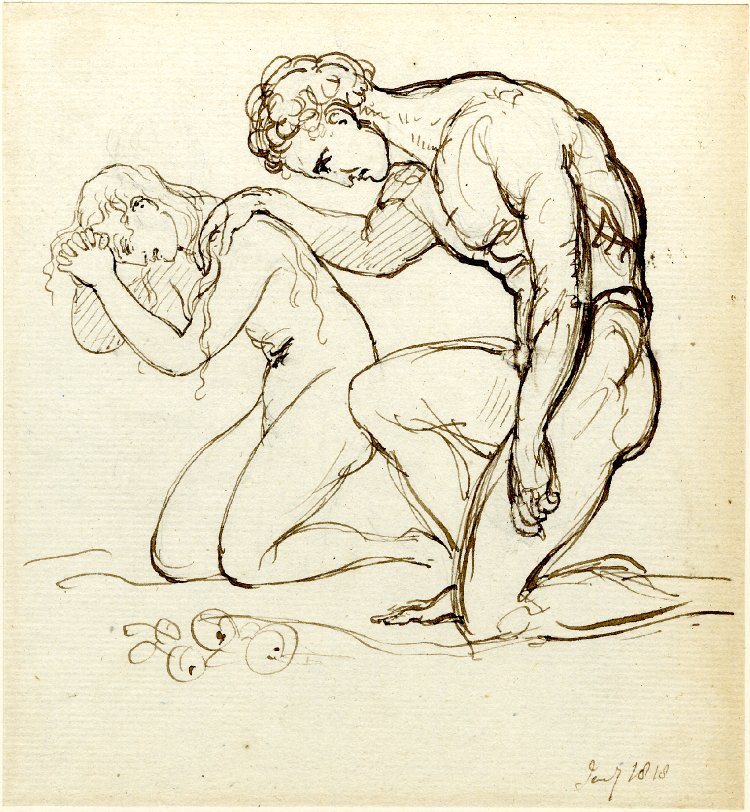
“What, though the field be lost?
All is not lost.”
Join Dr. Julie Sutherland in an engaging and rewarding study of Book I of John Milton’s Paradise Lost, the opening movement of a mind-stretching epic that traces Satan’s quest for revenge against the Creator through the temptation of Adam and Eve.
This study follows the twice-sold-out London Literary Salon exploration of the entire epic, after which many participants expressed a desire to linger over every line. By focusing on a single book, we will have the opportunity to do exactly that: slowing down to appreciate the richness, complexity and cinematic beauty of Milton’s verse.
This immersive study is structured as a shared reading experience, where participants will read every line of the fascinating book aloud, pausing regularly for discussion. Along the way, we will explore Milton’s portrayal of Satan and the fallen angels, the epic’s opening vision of Hell, and some of the poem’s central themes, including freedom, rebellion, authority and ambition.
JOINING DETAILS:
- Three-meeting study led by Dr Julie Sutherland live on Zoom
- Tuesdays 22 and 29 September and 6 October, 6.00-8.00 pm (UK time)
- £120.00 for three meetings
- We will use the Penguin Classics edition: Paradise Lost by John Milton, edited by John Leonard (ISBN-10: 9780140424393)
Organizer
Time
Location
LIVE ON ZOOM
Book this Salon
Places are no longer available for this event
Event Details
“Every reader finds himself. The writer’s work is merely a kind of optical instrument that makes it
Event Details
“Every reader finds himself. The writer’s work is merely a kind of optical instrument that makes it possible for the reader to discern what, without this book, he would perhaps never have seen in himself.”
Marcel Proust
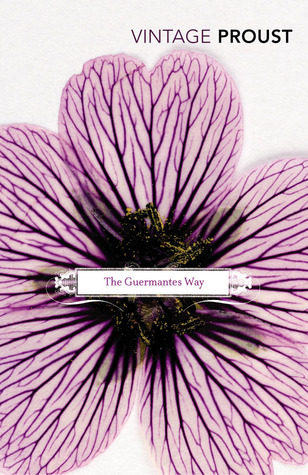
Facilitator Toby Brothers writes:
Marcel Proust’s In Search of Lost Time is one of the mountains of Modernism. This is my eighth tour through the Search and each visit reveals new nuggets and gasping moments. This third volume considers closely the draw of the social dance and the realm of social power: you might not think the anxious aristocracy of the Belle Epoque will teach you something about the world you live in – you will be surprised. The groups who have made it through the first two volumes in the last six months are lively and welcoming and we have room for two or three more to join us. If you have not read the first two volumes previously, please contact us to discuss.
Here is how one Salonista describes the pleasure and work of reading Proust: “This is a velvet jewel of a book that demands the attention of a lover full of enchantment and obsession, we need not get impatient as all good lovers perfect their art in taking their time.”
While another observes: “I feel really privileged to be gaining a better understanding of Proust’s amazing work and be able to enjoy the intricacies of his language and thoughts . . . the meetings allow plenty of time and space for exploration and our study is reinforced by emails and relevant essays in between meetings. I am very grateful to have this opportunity to join the study.”
Reading Proust teaches the reader to observe how the world is experienced, to be aware that although humans are tempted to give greater weight to the perceptual universe, it is the entwining of memory, idealised experience (dreams) and relationships with what our senses perceive that moulds our consciousness.
JOINING DETAILS:
- It may be possible for new members to join this group of readers. If you are interested please email litsalon@gmail.com using the subject heading: ‘Joining Proust Group’.
- Facilitated by Toby Brothers
- Wednesdays, 3.00-5.00 pm (UK time)
- Thirteen meeting study: 7 October – 9 December 2026, resuming from 13 January – 3 February 2027, N.B. these dates cover 14 weeks allowing one ‘spare’ week for use in case of illness.
- Recommended edition: Vintage Classics (Moncrieff/Kilmartin/Enright) ISBN-13: 978-0099362418
- £455 for thirteen meetings, includes background materials, literary criticism, opening notes and discussion notes.
Organizer
Time
Location
VIRTUAL
Future Event Times in this Repeating Event Series
Book this Salon
Places are no longer available for this event
Event Details
“Every reader finds himself. The writer’s work is merely a kind of optical instrument that makes it
Event Details
“Every reader finds himself. The writer’s work is merely a kind of optical instrument that makes it possible for the reader to discern what, without this book, he would perhaps never have seen in himself.”
Marcel Proust
Facilitator Toby Brothers writes:
Marcel Proust’s In Search of Lost Time is one of the mountains of Modernism. This is my eighth tour through the Search and each visit reveals new nuggets and gasping moments. This third volume considers closely the draw of the social dance and the realm of social power: you might not think the anxious aristocracy of the Belle Epoque will teach you something about the world you live in – you will be surprised. The groups who have made it through the first two volumes in the last six months are lively and welcoming and we have room for two or three more to join us. If you have not read the first two volumes previously, please contact us to discuss.
Here is how one Salonista describes the pleasure and work of reading Proust: “This is a velvet jewel of a book that demands the attention of a lover full of enchantment and obsession, we need not get impatient as all good lovers perfect their art in taking their time.”
While another observes: “I feel really privileged to be gaining a better understanding of Proust’s amazing work and be able to enjoy the intricacies of his language and thoughts . . . the meetings allow plenty of time and space for exploration and our study is reinforced by emails and relevant essays in between meetings. I am very grateful to have this opportunity to join the study.”
Reading Proust teaches the reader to observe how the world is experienced, to be aware that although humans are tempted to give greater weight to the perceptual universe, it is the entwining of memory, idealised experience (dreams) and relationships with what our senses perceive that moulds our consciousness.
JOINING DETAILS:
- It may be possible for new members to join this group of readers. If you are interested please email litsalon@gmail.com using the subject heading: ‘Joining Proust Group’.
- Facilitated by Toby Brothers
- Wednesdays, 5.30-7.30 pm (UK time)
- Thirteen meeting study: 7 October – 9 December 2026, resuming from 13 January – 3 February 2027, N.B. these dates cover 14 weeks allowing one ‘spare’ week for use in case of illness.
- Recommended edition: Vintage Classics (Moncrieff/Kilmartin/Enright) ISBN-13: 978-0099362418
- £455 for thirteen meetings, includes background materials, literary criticism, opening notes and discussion notes.
Organizer
Time
Location
VIRTUAL
Future Event Times in this Repeating Event Series
Book this Salon
Places are no longer available for this event
Event Details
Event Details

“Tamburlaine the Great.
Who, from a Scythian Shepherd
by his rare and wonderful Conquests
became a most puissant and mightye Monarque,
And (for his tyranny, and terrour in Warre) was termed
The Scourge of God.”
So reads the 1590 title page of the printed version of recent smash hits on the Elizabethan stage, the two parts of Christopher Marlowe’s Tamburlaine. Nothing was to be the same again. As Professor Stephen Greenblatt has written in his recent monograph on Marlowe (Dark Renaissance, 2025), “Virtually everything in the Elizabethan theatre is pre- and post-Tamburlaine. Most literary innovation is incremental; it is rare for a work of art to change everything so quickly and decisively. But Tamburlaine is one of those rare instances.”
The plays plot the career of Tamburlaine, who from his origins as a humble shepherd conquers the mighty empires of Persia and Turkey and makes inroads into Europe, a trajectory encompassing the most horrific acts of cruelty and barbarity, yet all done to the accompaniment of the most extraordinary language.
Tamburlaine established unrhymed iambic pentameter (what we now call blank verse) as the dominant form for English drama, a form adopted and developed by Marlowe’s contemporary Shakespeare. Here was a fresh verbal music to ravish the ears of Elizabethan audiences, with its “high astounding terms” and pyrotechnical rhetorical flourishes, but also a form capable of expressing tender intimacy and labyrinthine inward reflection. The language of Tamburlaine is exotic and intoxicating, incorporating spellbinding repetitions of words and names – Zenocrate, Usumcasane, Persepolis – it is a thrill to read aloud, and there will be plenty of opportunities to do this during the study.
Marlowe’s Tamburlaine is a character who provokes varied reactions and questions. Is he a conquering hero or a bloodthirsty tyrant? Are we meant to respond to him with horrified revulsion or vicarious pleasure, ravished by his language and superhuman energy and daring? Here is a man of unlimited aspiration, unconstrained power and an inhuman consistency of purpose, a progenitor of Shakespeare’s Richard III, Milton’s Satan and Melville’s Ahab, an analogue for many real-life political leaders, even in our own times.
In this study we will read through Part 1 of Tamburlaine. If there is interest, we will follow with the sequel, in which “Tamburlaine the scourge of God must die”.
JOINING DETAILS:
- Five meeting study, live on Zoom, led by Tim Swinglehurst
- Wednesdays, 6.00-8.00 pm (UK time), 16, 23, 30 September & 7, 14 October 2026
- Recommended edition: Tamburlaine, Parts One and Two by Christopher Marlowe, edited by Anthony B. Dawson, Methuen Drama (UK), 2003. ISBN: 978-0-7136-6814-8.
- £175.00 for five meetings, including background notes and resources.
REDUCED COSTS: We are committed to making our studies as affordable as possible. We can’t promise to help but please email us if you would like to be considered for a reduced-fee place (your details will be treated as confidential).
Organizer
Time
Location
LIVE ON ZOOM
Book this Salon
Places are no longer available for this event
Event Details
‘I
Event Details
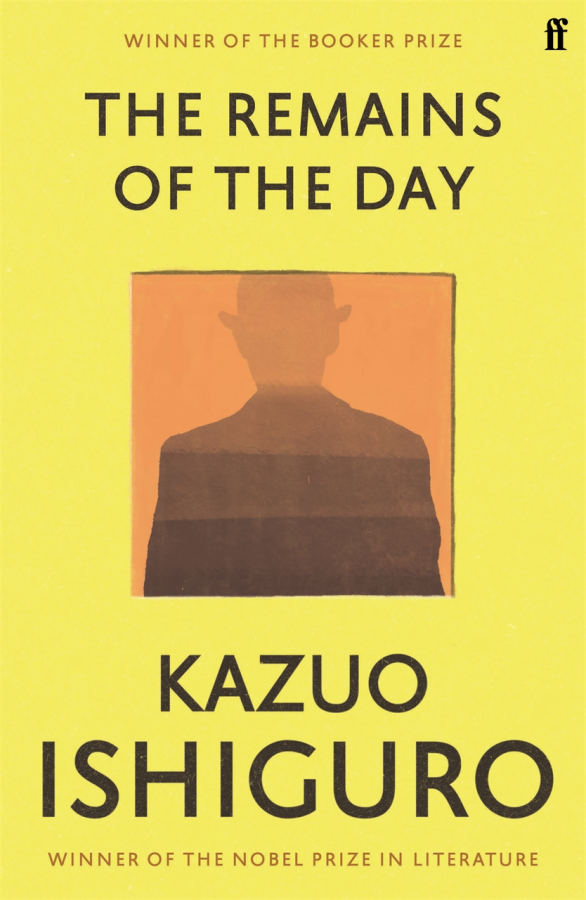
‘I believe it was then, looking on that view, that I began for the first time to adopt a frame of mind appropriate for the journey before me’
‘Stevens’
In a 2009 interview, Kazuo Ishiguro explained: ‘I started writing The Remains of the Day because of my suspicion that to some extent we are all butlers’.
- What does it mean to realise, at the end of your life, that all your most dedicated efforts were inadvertently in the service of evil?
- Can we ever see outside our own times, or are we doomed to limited perspectives based on unquestioned (unquestionable?) beliefs and cultural norms?
- How do our daily habits of thought, our seemingly petty emotions and feelings, influence the most important moments of our lives and loves?
These are among the profound questions posed by Kazuo Ishiguro’s masterful third novel, which won the Booker Prize in 1990. Having hitherto set all his fiction in Japan, Ishiguro placed this new narrative in England before and after World War II, and made his hero that most traditional of English figures, the butler. But by Ishiguro’s own account, time and place were not central to the book’s genesis; rather, the theme of misplaced loyalty was uppermost in his plans. Indeed, the novel repeats much of the theme and structure of his previous novel, An Artist of the Floating World, which was set in the same time period but in Japan.
In The Remains of the Day, Ishiguro also perfected a nuanced version of the ‘unreliable narrator’. He created what he calls an ‘ironic gap’ between himself and Stevens, which in turn creates an implied reader – us – who gradually begins to see everything that Stevens himself cannot. As critic Adam Parkes writes, ‘The narrative is like a mirror that shows us Stevens as he sees himself, or as he wants us to see him, but that also enables us to picture him quite differently.’
But how exactly does Ishiguro achieve this? And how does this link to the novel’s themes of appeasement, idealism and loyalty?
On this six-week study we will begin to unravel Ishiguro’s deceptively simple narrative, which has perhaps been falsely ‘clarified’ by the hugely successful film version starring Anthony Hopkins. We will discover what this novel does that the film – perhaps any film? – cannot, and why it remains one of the most highly-regarded and best-loved novels of the twentieth century.
JOINING DETAILS:
- Six-meeting study, live on Zoom, led by Lewis Ward
- Wednesday 7 October – 11 November 2026, 7.00-9.00 pm (UK time)
- Recommended edition: The Remains of the Day, Faber & Faber, ISBN-13 : 978-0571258246
- £210 for six meetings
REDUCED COSTS: we are committed to making our studies as affordable as possible. We have a fund in place to support anyone who would like to register for a study but finds the cost difficult to afford. We can’t promise to help, but please email us at litsalon@gmail.com in confidence if you would like to request a reduction in the cost of a study.
Organizer
Time
Location
LIVE ON ZOOM
Future Event Times in this Repeating Event Series
Book this Salon
Places are no longer available for this event
Event Details
Portrait of Oscar Wilde, Napoleon Sarony, Public domain, via Wikimedia Commons
Event Details
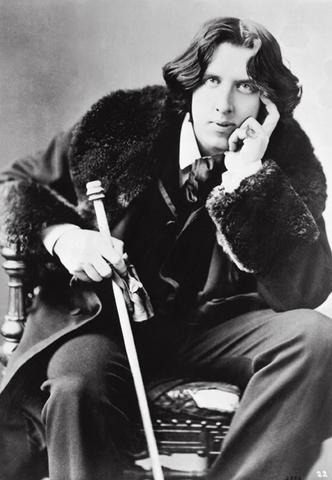
“I’m posting this LitSalon Short as a ‘taster’ for anyone considering joining the full study of Oscar Wilde’s The Picture of Dorian Gray, starting on Thursday, 12 November, 6.30–8.30 pm (UK time). Participants will also get a feel for my facilitation style.”
Nancy Goldstein
In this LitSalon Short we’ll be discussing Lord Arthur Savile’s Crime (1891), one of Wilde’s most deliciously cynical short stories. A society fortune-teller reads Lord Arthur’s palm at a London dinner party and discovers something so alarming that Lord Arthur resolves to act on it immediately — before he can be held responsible for the consequences. What follows is a comedy of manners so dark it is practically a thriller, and a satire of upper-class Victorian morality that barely needs to exaggerate its source material.
Or does it? Wilde’s central joke — that a man of honour must commit a crime in order to fulfil his social obligations — is both absurd and completely logical. The story asks, deadpan, what it means to do the right thing, and arrives at an answer that should perhaps trouble us more than it does.
This Short is also a way in to our upcoming study of The Picture of Dorian Gray — a novel Wilde’s fin de siècle critics denounced as unclean and dangerous, even though Stoddart had already gone through the original manuscript, pencil in hand, crossing out some 500 words to make it acceptable. One hundred and thirty-six years on, Wilde’s central question feels less like Victorian Gothic and more like Monday morning: what are we willing to sacrifice — integrity, authenticity, other people — to keep the image intact? Wilde knew, long before Instagram did, that the real corruption isn’t the sins you commit; it’s the lengths you’ll go to make sure nobody sees them.
JOINING DETAILS:
- Single session LitSalon Short on Oscar Wilde’s Lord Arthur Savile’s Crime (which can be downloaded from links in this post) led by Dr Nancy Goldstein
- Thursday 8 October, 5.00–6.30 pm (UK), live on Zoom
- ‘LitSalon Shorts’ are single-session studies (usually slightly shorter than a typical Salon study meeting) in which a facilitator shares with the wider Salon community their enthusiasm for an aspect of literature or culture.
- Shorts are offered free of charge, but numbers are limited so please use the booking form below to reserve a place. Although there is no fee for this Short, Nancy asks you to consider making a donation — perhaps the price of your last G&T or flat white? — to José Andrés’ World Central Kitchen, which feeds hungry people in war and emergency zones all over the world, from Gaza and Ukraine to Pakistan and areas struggling with natural disasters.
Organizer
Time
Location
LIVE ON ZOOM
Book this Salon
Places are no longer available for this event
Event Details
Juliet, John William Waterhouse, Public domain, via Wikimedia Commons
Event Details

The NATO phonetic alphabet was devised so that words could be spelled out over radio or telephone, to avoid mistakes in communication through interference of any kind. The fact that the word selected for the letter J is Juliet, and for R is Romeo confirms the universal recognition of those two names. The story of the star-crossed lovers had been told several times before Shakespeare’s play, but it is this – his second tragedy – that brought the story undying fame.
Romeo and Juliet was written around 1595-6 and shares these dates and broad themes with A Midsummer Night’s Dream. The opening scenes of both plays include stern edicts: in Romeo and Juliet Prince Escalus of Verona, tired of the public disturbances caused by the feud between the Montagues and the Capulets, warns the two families ‘If ever you disturb our streets again, Your lives shall pay the forfeit of the peace.’ In A Midsummer Night’s Dream, Egeus, father to Hermia, asks Duke Theseus to condemn her to death if she will not agree to marry the groom he has chosen for her.
Either play could end in tragedy, but in A Midsummer Night’s Dream a journey through the woods and the intervention of spirits leads to a happy resolution and the farcical performance by ‘rude mechanicals’ of Pyramus and Thisbe, the play within the play which reflects the plot of Romeo and Juliet. In contrast, Romeo and Juliet have no such luck, the series of errors and accidents that befall them, from the death of Mercutio to the failure of the Mantua postal service, leads to the tomb rather than the wedding feast.
The language of the play is wonderfully varied and intricate. It begins with a chorus speech – a sonnet very much in the Petrarchan mode – and goes straight from there to a prose scene between servants that begins with jokes but rapidly leads to a street fight and the entrance of Prince Escalus. Our first sight of Romeo, entering after the fight is over and sighing over Rosaline, is of the doting lover, seemingly more in love with love than with a flesh and blood creature:
‘O heavy lightness, serious vanity,
Misshapen chaos of well seeming forms,
Feather of lead, bright smoke, cold fire, sick health,
Still-waking sleep, that is not what it is!
This love feel I, that feel no love in this.’
His first encounter with Juliet is a conversation contained within a sonnet. The language they use has none of the fashionable oxymorons, it takes one simple image – that of a pilgrim – and gives it the intensity and all-consuming passion of first love. They understand each other completely.
Shakespeare’s only other tragedy at this point was Titus Andronicus, firmly placed in ancient Rome and, although nominally set in the Renaissance of the 1300’s, Romeo and Juliet feels much closer in time to the contemporary audience than the usual classical settings. The play is culturally ubiquitous, it has reached beyond theatre to film, song, meme and even the NATO phonetic alphabet! It dramatises the conflicts – between love and hate, social structure and individual desire, tradition, fate and free will – that every generation reinvents in its own terms.
JOINING DETAILS:
- Eight-meeting study, live on Zoom, led by Jane Wymark
- Mondays, 19 October – 7 December, 6.00-8.00 pm (UK time)
- Recommended edition: Romeo and Juliet (The Arden Shakespeare Third Series) edited by Rene Weis, ISBN: 978-1903436912
- £280.00 for eight two-hour meetings, to include background notes and resources.
Organizer
Time
Location
LIVE ON ZOOM
Future Event Times in this Repeating Event Series
Book this Salon
All places are booked
Event Details
Event Details
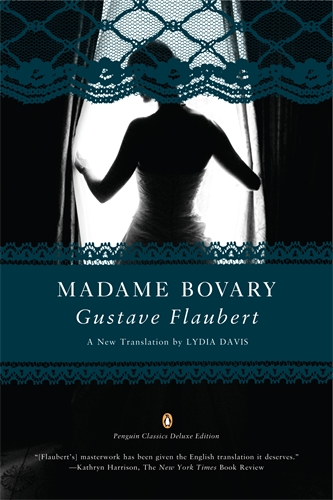
“La Bovary, c’est moi.“
Gustave Flaubert
“Quand Mme Bovary parut, il y eut toute une révolution littéraire… Le code de l’art nouveau se trouvait écrit.“
“When Mme Bovary appeared, there was a whole literary revolution . . . the code of a new art was written.”
Emile Zola
Gustave Flaubert (1821 – 1880) is often referred to the first modern novelist and the inventor of literary realism. Madame Bovary arrived on the scene (trailing generally negative reviews and a lawsuit for offence against public morals and religion, of which Flaubert was acquitted) misunderstood and undervalued, but Flaubert knew that he had written a masterpiece. Time proved him correct.
Flaubert wrote precise fiction in reaction to idealism and romanticism. His goal was to present the world as it really was; there are no heroes in Madame Bovary. He used clear and concise language (he wanted to remove all poetry from his writing), a meticulous attention to detail, a crystalline structure, and brilliant psychological insights into his characters. Flaubert rejected the idea of artistic inspiration, and laboured like a mole for fifty-three months, testing every word for its aptness, and reading and rereading each sentence. But he wasn’t interested in merely creating the perfect form. He entered the emotional life of his characters, feeling his way through the novel. It was written in the early days of France’s industrial age, and Flaubert wanted literature to aid in the understanding of human nature, just as the natural sciences and social sciences did.
Madame Bovary appeared at number 10 in the Guardian’s 2026 ‘Best 100 Novels of All Time’ with good reason. Although it is completely embedded in its time and place, I believe it has much to say about how we live now, and this is something we will explore in this study. There are many young girls today who are living completely in the world of internet influencers, lost in a dream disconnected from any reality. Will they emulate Emma Bovary in our own age as they attempt to navigate the world as it really is?
N.B. A study of Flaubert’s Sentimental Education is planned for early in 2027.
JOINING DETAILS:
- Eight-meeting study led by Ralph Kleinman
- Tuesdays, 6.00-8.00 pm UK time
- 20 October to 8 December 2026
- Recommended edition: Madame Bovary by Gustave Flaubert, translated by Lydia Davis, Penguin Classics, ISBN-13: 9780143106494 (to avoid confusion we ask that all participants use the same translation during study meetings)
- £280 for eight meetings, to include opening notes and resources
REDUCED COSTS: we are committed to making our studies as affordable as possible. We have a fund in place to support anyone who would like to register for a study but finds the cost difficult to afford. We can’t promise to help, but please email litsalon@gmail.com in confidence if you would like to request a reduction in the cost of a study.
Organizer
Time
Location
VIRTUAL - ON ZOOM
Future Event Times in this Repeating Event Series
Book this Salon
Event Details
Event Details
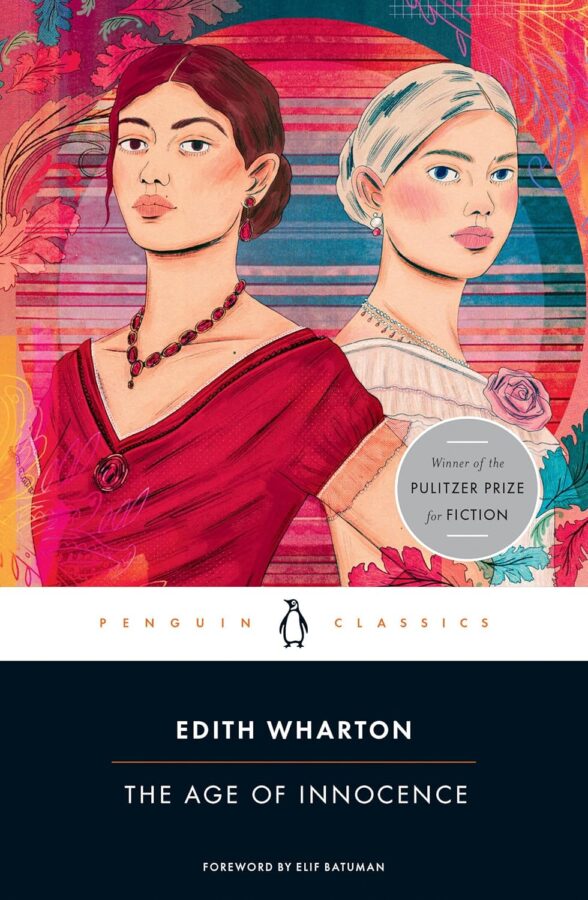
Published in 1920 — the same year American women won the right to vote — The Age of Innocence is set in a world Edith Wharton knew from the inside: Old New York society, a closed world of inherited money and rigid ritual revolving around the unspoken rule that nothing shall ever, under any circumstances, be said plainly. What cannot be acknowledged cannot threaten. What cannot be named cannot exist.
Into this airless world arrives Countess Ellen Olenska, who has had the bad taste to flee an abusive marriage and the worse taste to expect her family’s support. She is sophisticated, unconventional, and faintly European. In short, dangerous. Newland Archer is engaged to the exquisitely correct May Welland. He should not be thinking about Ellen Olenska at all. What follows is a love story in which almost nothing happens and everything is at stake.
The Age of Innocence won the Pulitzer Prize in 1921, making Wharton the first woman to receive it. The jury had voted for Sinclair Lewis’s Main Street, only to be overruled by Columbia University’s conservative trustees, who found Lewis’s satire insufficiently “wholesome” — and awarded the prize to a novel whose entire project is the dissection of the world that word protects. Wharton, on learning the prize was meant for Lewis, wrote to him: “When I discovered that I was being rewarded — by one of our leading Universities — for uplifting American morals, I confess I did despair.”
In a cultural moment defined by the performance of virtue and the management of image — by the gap between the life curated for public consumption and the life actually lived — Wharton’s diagnosis of how societies enforce conformity, and what it costs the people who comply, has never felt more precise. She knew that the real cost of a society built on appearances isn’t borne by the people who break the rules. It’s borne by the people who keep them.
Let us read.
JOINING DETAILS:
- Six-meeting study, live on Zoom, led by Dr Nancy Goldstein
- 21 October – 25 November 2026
- Wednesdays, 6.30–8.30 pm (UK time)
- £240 for six two-hour meetings
- Recommended edition: The Age of Innocence, Penguin Classics, 1996. ISBN: 9780140189704
REDUCED COSTS: we are committed to making our studies as affordable as possible. We have a fund in place to support anyone who would like to register for a study but finds the cost difficult to afford. We can’t promise to help, but please email us at litsalon@gmail.com in confidence if you would like to request a reduction in the cost of a study.
Organizer
Time
Location
LIVE ON ZOOM
Future Event Times in this Repeating Event Series
Book this Salon
Event Details
The Pain Comforted by Faith by Giovanni Segantini, Public domain,
Event Details
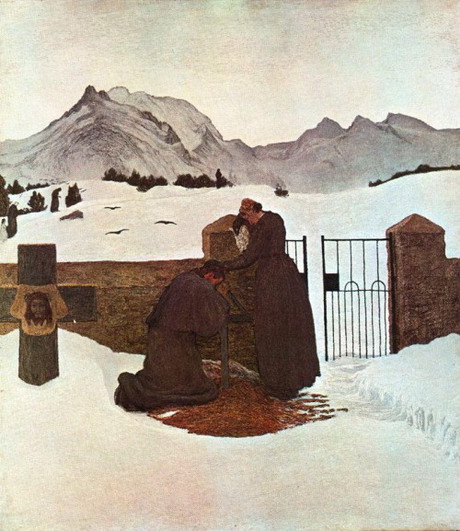
i held an atlas in my lap
ran my fingers across the whole world
and whispered
where does it hurt?it answered
everywhere
everywhere
everywhere.Warsan Shire, from What They Did Yesterday Afternoon
To live is to love, in all its many forms. Myriad entities become the subjects of our love: human and non-human animals, the land and water and sky. Because we love, we must suffer its corollary—loss. But how do we process the many losses we face, personal and collective, over a lifetime? Experts say that in the West our mourning rituals have diminished, even while we are confronted with increasing reasons to feel grief. Today, the world feels deeply damaged. Everywhere, it and we are hurting. In the last decade alone, we have been confronted with calamitous political violences, climate disasters, a global pandemic, and the breakdown of human rights. In these unsettling times, every flash of breaking news is enough to crack the human heart. And while we bear these, we continue to sustain personal devastation.
Can poetry help us process our grief? Can it be part of a grieving practice to help us make sense of our feelings? Can it invite us into a community of mourners who find strength in each other’s stories? In this workshop, we will examine three poems exploring different kinds of grief: collective, private and ecological. Join Julie Sutherland in a study of poems by Heid E. Erdrich (Public Grief), Jackie Kay (Darling), and Pamela Mordecai (My Sister Cries the Sea). We will close the session with a reading of Mary Oliver’s In Blackwater Woods.
Please note: This workshop is rooted in the belief that poetry has the power to heal emotional wounds, shift public attitudes towards divisive topics and improve social connectedness during times of global distress. To allow participants extra time to experience the poetry contemplatively as well as intellectually, the single session runs for 2.5 hours.
Poems and resources will be sent to participants in advance of the session.
Communal Grief: Heid E. Erdrich – Public Grief
Private Grief: Jackie Kay – Darling
Ecological Grief (Eco-Grief): Pamela Mordecai – My Sister Cries the Sea
Conclusion – Practising the Bittersweet Art of Letting Go: Mary Oliver – In Blackwater Woods
JOINING DETAILS:
- Single 2.5 hour meeting live on Zoom, led by Julie Sutherland
- Thursday, 22 October, 5.00-7.30 pm (UK time)
- £50 for single meeting, to include notes and resources
Organizer
Time
Location
LIVE ON ZOOM
Book this Salon
Event Details
The wife of the Green Knight secretly visits Sir Gawain in his bedchamber, British Library, CC0, via Wikimedia Commons
Event Details
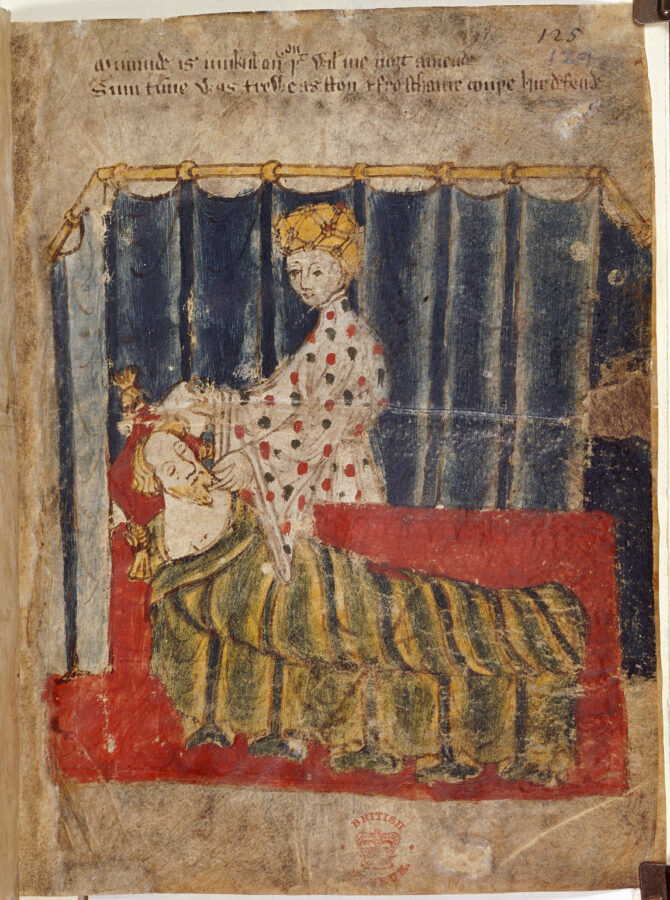
“But where will you be? Where’s your abode?
You’re a man of mystery, as God is my maker.”from Simon Armitage’s translation of Sir Gawain and the Green Knight
Believed to date from around 1400 and regarded as one of finest surviving examples of Middle English poetry, we know little about who wrote Sir Gawain and the Green Knight other than that they were from the North of England.
Set at Christmas in Camelot, the court of King Arthur, it is a mythic tale of magic and mystery in the age of chivalry that has attracted countless translators to explore its rich literary artistry and subtle psychological depth.
In this LitSalon Short we will consider the enduring appeal of this otherworldly wintry adventure and the translation by the Poet Laureate, Simon Armitage, which will be the subject of a four-meeting study led by Tim Swinglehurst in the weeks before Christmas.
JOINING DETAILS:
- Single meeting LitSalon Short led by Tim Swinglehurst live on Zoom
- Wednesday 28 October, 6.00-7.15 pm (UK time)
- LitSalon Shorts are offered free-of-charge, but please use the form below to reserve your place
- Recommended edition: Simon Armitage, Sir Gawain and the Green Knight, Faber & Faber, 2007, ISBN 978-0-571-22328-2.
Organizer
Time
Location
LIVE ON ZOOM
Book this Salon
All places are booked
Event Details
Photo by K. Mitch Hodge on Unsplash ‘I
Event Details

‘I fell upon Shakespeare suddenly, and I was struck as though by lighting’. So wrote the nineteenth-century French composer Hector Berlioz in his Mémoires, reflecting on his first encounter with Hamlet, followed days later by Romeo and Juliet.
What he describes is not mere admiration but devastation: art experienced as shock, grief, and prolonged emotional disorientation. This is the opening lecture in the Case for Unhappiness: Arts Against the Tyranny of Positivity, a series that explores the paradox of tragedy—the pleasure found in the representation of suffering—and the enduring human attraction to stories that unsettle and wound us. From Ancient Greek drama to modern literature, music and visual art, artists have repeatedly turned to pain as a source of beauty, truth and insight.
Grounded in aesthetic theory, literary studies, and philosophy, this lively and accessible lecture is designed for curious minds, no prior knowledge is required.
Works which will be referenced include: Antigone (Sophocles), King Lear (Shakespeare), The Awakening (Kate Chopin), Betroffenheit (Crystal Pite and Jonathon Young, which can be viewed at Marquee TV),
JOINING DETAILS:
- Single lecture (with further events to follow at dates to be confirmed) by Dr Julie Sutherland, live on Zoom, followed by live audience discussion moderated by Toby Brothers.
- Thursday 29 October, 5.00-7.00 pm (UK time)
- £25.00 for 1.5 hour lecture with early booking discount price of £20.00 available until 1 October using the code BREAK20) at checkout.
Organizer
Time
Location
LIVE ON ZOOM
Book this Salon
November 2026
Event Details
Alfred Lord Tennyson by Samuel Laurence, Public domain, via Wikimedia
Event Details
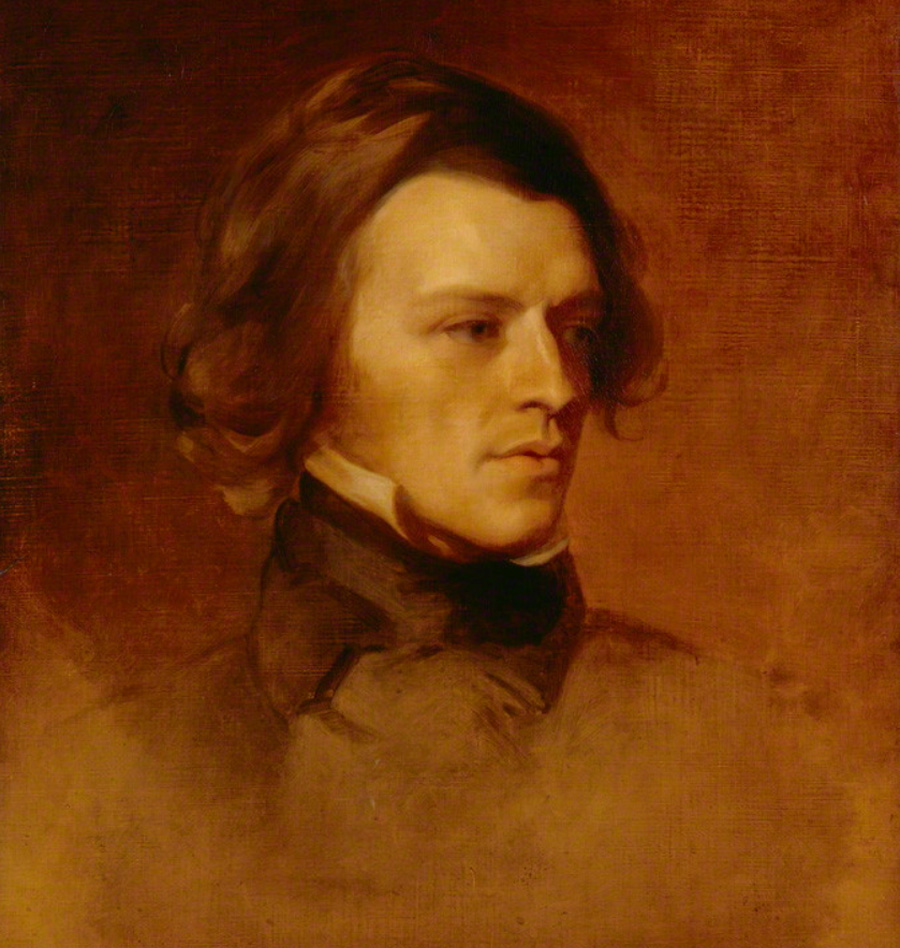
”Dark house, by which once more I stand
Here in the long unlovely street,
Doors, where my heart was used to beat
So quickly, waiting for a hand…”
We hope that this Salon on Tennyson will be the first of many, where Tim Swinglehurst invites salonistas to a tasting of a specific poet writing sometime between the English Renaissance and the outbreak of the First World War. His aim is that after two weeks you will be left wanting more!
In 1946 W.H. Auden articulated the polarised reception – Victorian idolisation versus Modernist rejection – of his venerable poetical predecessor, Alfred Lord Tennyson, writing “He had the finest ear, perhaps, of any English poet; he was also undoubtedly the stupidest; there was little about melancholia he didn’t know; there was little else that he did”. Tennyson’s mastery of form and exceptional ear for rhythm and lyrical phrasing (“the finest ear of any English poet since Milton” said T.S. Eliot) were praised; his preference for hypnotic, sensual musicality at the expense of intellectual rigour and moral seriousness condemned (according to F.R. Leavis he was guilty of an unhealthy, “dream world” escapism, while Eliot – again – described “a further stage in the disintegration of the intellect, the further separation of sound, image and thought”).
More generously, Professor Christopher Ricks has written, “That, among so much else, he knew – and could effect – consolation as no one else has in our tongue, knowing consolation in its substantiality as well as its limits; that he understood madness, bereavement, fear, shivering, erotic loveliness, undying friendship, loss, exquisite courtesy, as it has been given to very few to understand them.” Extraordinary that anyone should have such comprehensive understanding of melancholia as Auden claims for Tennyson, mind-boggling that his understanding may encompass so much more.
During this two-week Salon we will read short poems and selected passages from longer poems to taste Tennyson for ourselves and see how we respond to his verse. We will, among other poems, read from The Lotos-Eaters and Ulysses, listening to Tennyson in dialogue with Homer’s Odyssey; explore a fraction of Tennyson’s grief and the mind-altering challenges of geology and cosmology to his faith expressed in In Memoriam; and journey into the deeply disturbed and deteriorating psyche of the narrator of the monodrama Maud. We will, most importantly, take time to read some of Tennyson’s verse aloud together, experiencing with our ears and voices the Tennyson ‘sound’.
“Now folds the lily all her sweetness up,
And slips into the bosom of the lake.
So fold thyself, my dearest, thou, and slip
Into my bosom and be lost in me.”
JOINING DETAILS:
- Two-meeting study led by Tim Swinglehurst live on Zoom
- Tuesday 3 & 10 November, 6.00-8.00 pm (UK time)
- £80 for two meetings
REDUCED COSTS: we are committed to making our studies as affordable as possible. We have a fund in place to support anyone who would like to register for a study but finds the cost difficult to afford. We can’t promise to help, but please email us at litsalon@gmail.com in confidence if you would like to request a reduction in the cost of a study.
Organizer
Time
Location
LIVE ON ZOOM
Book this Salon
Event Details
This is the fourteenth in a series of single session studies on Shakespeare’s Sonnets. Participants are welcome to join as few or many sessions
Event Details
This is the fourteenth in a series of single session studies on Shakespeare’s Sonnets. Participants are welcome to join as few or many sessions as they please.

“To me, fair friend, you never can be old,
For as you were when first your eye I eyed,
Such seems your beauty still.”from Sonnet 104
Shakespeare’s sonnets have inspired, fascinated and disturbed readers for centuries. Full of mystery and imagination, they dazzle us even as they drive us mad: Who is the fair youth to whom so many of these sonnets are addressed? Who is the dark lady, the complex beloved of so many others? Who is the rival poet and what power does he possess? Are these lyric expressions of tortured love – among other themes – the key to understanding the mysterious life of Shakespeare, or are they not autobiographical at all?
Through close analysis and hands-on interpretive work, we will examine Shakespeare’s kaleidoscopic exploration of his speaker’s romantic and tortured feelings and experiences.
JOINING DETAILS:
- Single two-hour meeting led by Dr Julie Sutherland on Zoom
- Thursday 5 November 2026, 6.00 – 8.00 pm (GMT)
- Session #14 – Sonnets 98,104 & 106
- £30.00 for two-hour study
We are offering these self-contained, individual studies of Shakespeare’s sonnets in a workshop style setting. Over time we will cover a broad selection of the 154 sonnets that comprise Shakespeare’s celebrated sequence. Participants are invited to join as few or many sessions as they please.
Before the session, Julie Sutherland will send links to online versions or attach specific copies for discussion. It is highly recommended that you print these off before joining this hands-on session. If you have a printed edition, please also have it ready so we can consider variations between texts. Have a notebook and pencil on hand as well!
REDUCED COSTS: we are committed to making our studies as affordable as possible. We have a fund in place to support anyone who would like to register for a study but finds the cost difficult to afford. We can’t promise to help, but please email us at litsalon@gmail.com in confidence if you would like to request a reduction in the cost of a study.
Organizer
Time
Location
VIRTUAL - ON ZOOM
Book this Salon
Event Details
A close, contemplative reading of seven classic Russian short stories, guided by George Saunders’ provocative description
Event Details
A close, contemplative reading of seven classic Russian short stories, guided by George Saunders’ provocative description of them in A Swim in a Pond in the Rain as “seven fastidiously constructed scale models of the world, made for a specific purpose that our time maybe doesn’t fully endorse but that these writers accepted implicitly as the aim of art — namely, to ask the big questions.”
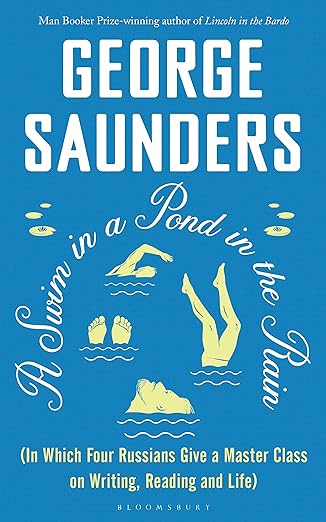
What happens when we read these stories with that purpose in mind? We’ll consider questions of truth and love, how to live and how to make meaning within the solitary confinement of our mortality. Together, we’ll linger over the strange, precise worlds these writers have made—and see what their stories might still ask of us.
In this study, we will use the book as a background to our own reading, focusing on the stories themselves—by Chekhov, Turgenev, Tolstoy and Gogol—while also drawing on Saunders’ insights as a backdrop to our discussions. Rather than analysing his commentary in detail, we will engage directly with these literary masterpieces, exploring their themes, techniques and enduring relevance.
JOINING DETAILS:
- A Swim in a Pond in the Rain, ISBN 978-1526624246 is a required text for this study
- Four-week study on Zoom led by Alison Cable
- Thursdays, 6.00-8.00 pm (UK time)
- 5, 12, 19, 26 November 2026
- £140 to include introductory notes and resources
Organizer
Time
Location
LIVE ON ZOOM
Future Event Times in this Repeating Event Series
Book this Salon
Event Details
JMW Turner, Light and Colour (Goethe’s Theory) – The Morning after the Deluge – Moses Writing the Book
Event Details

The Ring of the Nibelung is one of the great artworks of the western tradition. It is a modern epic that explores the corrupting influence of power and wealth, and the resulting conflicts between love, jealousy and greed.
Wagner remains highly influential and controversial; his operas continue to raise strong feelings both pro and contra. The Royal Opera at Covent Garden are in the midst of building a new Ring Cycle: Götterdämmerung will be performed for the end of January 2027, and it is anticipated that performances of the complete cycle will take place in autumn 2027.
The London Literary Salon will take this opportunity to study Wagner’s epic music drama in depth. We will begin this autumn with an introductory salon on the cycle as a whole and Wagner’s methods. The Ring comprises four separate operas (Das Rheingold, Die Walküre, Siegfried and Götterdämmerung) and when performed as a cycle is 15 hours in length, taking place over four evenings in the space of a week. Wagner’s literary sources were The Nibelungenlied, a German medieval epic poem and Scandinavian/Icelandic sagas of the Norse gods: The Prose Edda, The Poetic Edda and the Völsunga Saga.
In our Tristan and Isolde study last year we discussed Wagner’s medieval sources as literary works in their own right, and then looked at the opera. After receiving positive feedback, we are taking the same approach to The Ring. In 2027 the we will offer studies on The Nibelungenlied, The Prose Edda and The Poetic Edda, as well as listening sessions for The Ring Cycle. We invite you to join a group of interested Salonistas to experience this great artwork together. No background in music education is necessary. Our first Salon study,The Ring Cycle: An Introduction, will be structured in four parts:
Session 1 – The Story
We will cover the plot for the whole cycle and consider Wagner’s poetic and dramatic methods.
Session 2 – The Music
We will explore the nature of the music and musical methods, with an introduction to the main leitmotifs and some of the ‘highlights’ from the cycle.
Session 3 – The Philosophy
We will review the transition from revolutionary politics to the philosophy of Schopenhauer and its relevance to music and tragedy. This session will also continue the discussion of music from the previous meeting.
Session 4 – The Performance
We will consider the idea of a ‘total work of art’ and present an overview of different ways in which the ring cycle has been interpreted and staged. We will also discuss recordings and filmed productions that participants may wish to consider.
JOINING DETAILS:
- Four-meeting study, live on Zoom, led by Sean Forester with Salonista and Wagner enthusiast Richard Fox
- Sundays, 8-29 November 2026, 5.45-8.15 pm (UK time)
- Recommended text: Wagner’s Ring of the Nibelung: A Companion, Stewart Spencer & Barry Millington (authors/translators/editors)
- £200 for four 2.5 hour meetings, to include background notes and resources
Organizer
Time
Location
LIVE ON ZOOM
Future Event Times in this Repeating Event Series
Book this Salon
All places are booked
Event Details
Drawing by Thomas Patch,
Event Details
“I’m posting this LitSalon Short as a ‘taster’ for anyone considering joining me for the ten-meeting study of Charles Dickens’ Bleak House, starting 14 January 2027, 6.30–8.30 pm (UK time). Participants will also get a feel for my facilitation style.”
Nancy Goldstein
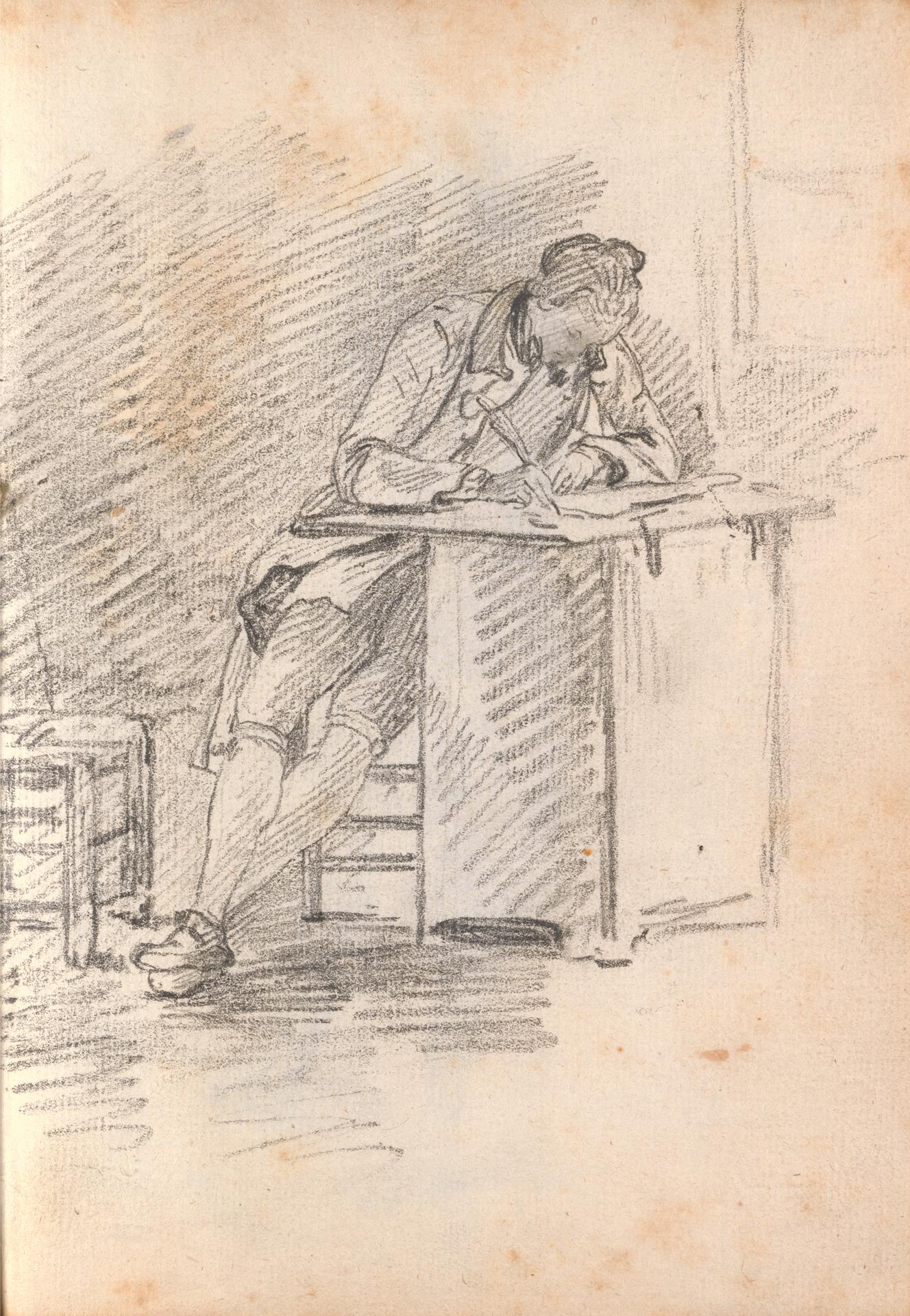
In this LitSalon Short we’ll be discussing Herman Melville’s Bartleby, the Scrivener (1853), one of the strangest and most haunting stories in American literature. Published in the same year as Bleak House, it echoes many of the themes in Charles Dickens’ novel.
A law office. A copyist who responds to every request with “I would prefer not to.” A system that cannot process a human being who simply stops complying.
Or can it? Melville’s central joke — that a man who does nothing is more destabilising than a man who does harm — is both absurd and completely logical. The story asks, with a perfectly straight face, what happens when a human being falls through the cracks of every institutional net designed to catch him.
As for Bleak House. Dickens’ masterpiece has at its centre Jarndyce and Jarndyce, a suit in Chancery that has consumed fortunes, ruined lives, and become its own self-perpetuating institution — a monument to procedural delay so vast and so perfectly constructed that it requires no villain to sustain it. The thematic overlap with Bartleby is exact: the way bureaucratic logic defeats human agency without anyone being visibly responsible. Dickens knew that the cruellest thing a corrupt system can do is not to break its own rules. It’s to follow them perfectly.
Our ten-meeting study of Bleak House begins on Thursday 14 January 2027.
JOINING DETAILS:
- Single session LitSalon Short on Herman Melville’s Bartleby, the Scrivener, led by Dr Nancy Goldstein. The story is available free online via the linked text above.
- Thursday 12 November, 5.00–6.30 pm (UK time), live on Zoom
- ‘LitSalon Shorts’ are single-session studies (usually slightly shorter than a typical Salon study meeting) in which a facilitator shares with the wider Salon community their enthusiasm for an aspect of literature or culture.
- Shorts are offered free of charge, but numbers are limited so please use the booking form below to reserve a place. Although there is no fee for this Short, Nancy asks you to consider making a donation — perhaps the price of your last G&T or flat white? — to José Andrés’ World Central Kitchen, which feeds hungry people in war and emergency zones all over the world, from Gaza and Ukraine to Pakistan and areas struggling with natural disasters.
Organizer
Time
Location
LIVE ON ZOOM
Book this Salon
All places are booked
Event Details
Event Details
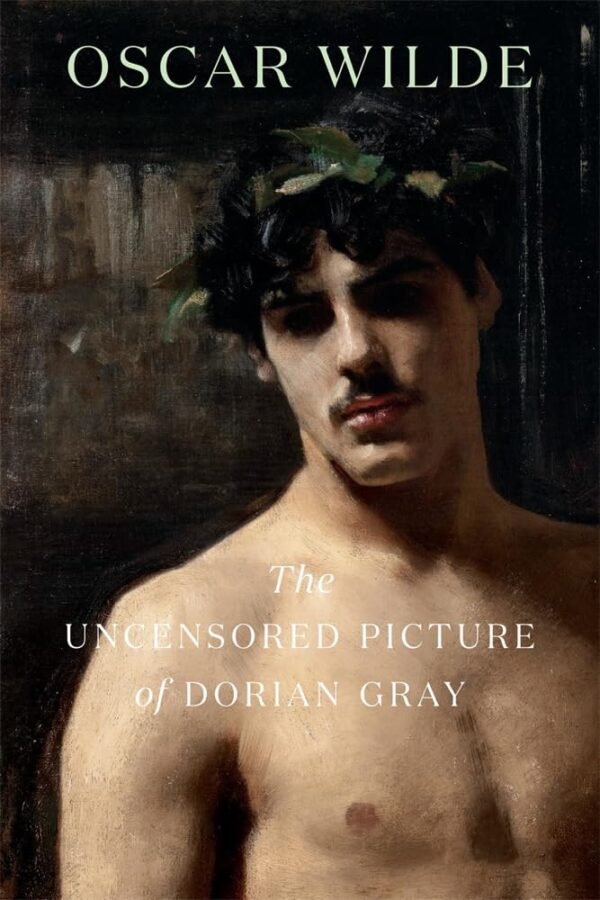
“. . . Unclean . . . spawned from the leprous literature of the French decadents — a poisonous book . . . ”
“Dull and nasty . . . stupid and vulgar . . . immoral. It may be suggested that Wilde derives pleasure from treating a subject merely because it is disgusting.”
“The poor public, hearing from an authority so high as your own, that this is a wicked book that should be coerced and suppressed by a Tory Government, will, no doubt, rush to it and read it. But, alas, they will find that it is a story with a moral. And the moral is this: All excess, as well as all renunciation, brings its own punishment. ”
Oscar Wilde, from his response to the St. James Gazette review, 25 June 1890
Joseph Marshall Stoddart, Oscar Wilde’s editor in the Philadelphia offices of Lippincott’s Magazine, was neither a bumpkin nor a prude: in 1882 he arranged for Wilde to visit Walt Whitman in Camden, New Jersey, during his American visit. But, alarmed by material he feared readers would find “offensive”, and unbeknownst to its author until after publication, Stoddart went through Wilde’s original manuscript, pencil in hand, crossing out some 500 words to render it “acceptable to the most fastidious taste.”
In short, the novel that Wilde’s irate fin de siècle reviewers deemed filth was already a bowdlerised version of The Picture of Dorian Gray.
The contemporary reader, fresh from watching the latest episode of RuPaul’s Drag Race, may struggle to understand the fury that The Picture of Dorian Gray unleashed in the 1890s. Or the stench it carried for decades after, having starred as Exhibit A in Wilde’s 1895 trials for “gross indecency”.
One hundred and thirty-six years on, The Picture of Dorian Gray speaks to our moment with uncanny precision.
Dorian Gray’s portrait — polished, static, forever young while its subject rots — anticipates the curated profile picture, the Zoom filter, the gap between the life performed online and the life actually lived. In an era of Botox and doom scrolling, instant gratification and weekly scandal, Wilde’s central question feels less like Victorian Gothic and more like Monday morning: what are we willing to sacrifice — integrity, authenticity, other people — to keep the image intact?
Wilde knew, long before Instagram did, that the real corruption isn’t the sins you commit; it’s the lengths you’ll go to make sure nobody sees them.
This study will use, as its basic text, The Uncensored Picture of Dorian Gray, published by the Harvard University Press (2012).
JOINING DETAILS:
- Four-meeting study, live on Zoom, led by Dr Nancy Goldstein
- Thursdays, 6.30-8.30 (UK time), 12 November – 3 December
- HIGHLY recommended edition: The Uncensored Picture of Dorian Gray: A Reader’s Edition ISBN: 9780674066311
- £160.00 for four two-hour meetings
REDUCED COSTS: we are committed to making our studies as affordable as possible. We have a fund in place to support anyone who would like to register for a study but finds the cost difficult to afford. We can’t promise to help, but please email us at litsalon@gmail.com in confidence if you would like to request a reduction in the cost of a study.
Organizer
Time
Location
LIVE ON ZOOM
Future Event Times in this Repeating Event Series
Book this Salon
Event Details
“I seemed to be lying neither asleep nor awake looking down a long corridor of gray
Event Details
“I seemed to be lying neither asleep nor awake looking down a long corridor of gray half light where all stable things had become shadowy paradoxical all I had done shadows all I had felt suffered taking visible form antic and perverse mocking without relevance inherent themselves with the denial of the significance they should have affirmed thinking I was I was not who was not was not who.”
William Faulkner, The Sound and the Fury
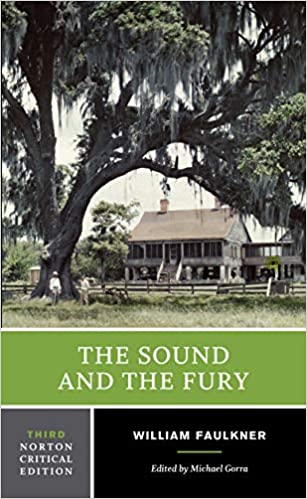
In William Faulkner’s first truly modernist work, he attempts to break through the confines of time and sequence to get at the essence of human nature. As Malcolm Bradbury explains, “Faulkner’s preoccupation with time has to do with the endless interlocking of personal and public histories and with the relation of the past to the lost, chaotic present.” The Sound and the Fury exposes a crumbling world through inference and allusion rather than using direct social critique. In the modernist method, Faulkner employs stream of consciousness and symbolism as connecting fibres against individual interior realities that must compete for authority.
This study – the third in our ‘Faulkner and his children’ series – will draw upon participants’ questions and ideas to shed light on this complex text. The book is richer when discussed, enabling the first time reader to access Faulkner’s vision, while those re-reading will find greater depth and resonance. Upon a first reading, the narratives appear jumbled and opaque; but as the pieces start to fit together, the complex and careful planning that Faulkner employs becomes apparent. Does the work expose the depths and hidden realms of the human spirit? This is what we must grapple with in our study.
JOINING DETAILS:
- Led by Toby Brothers & John Allemand live on Zoom
- Monday evenings 5.30 – 7.45 pm (UK time)
- Five-meeting study 16 November – 14 December 2026
- Recommended edition: The Sound and the Fury by William Faulkner, Norton Critical Edition (edited by Michael Gorra); ISBN-13: 978-0393912692
- £250 for five meeting study with two facilitators (11.25 hours in total)
Time
Location
VIRTUAL - ON ZOOM
Future Event Times in this Repeating Event Series
Book this Salon
Event Details
Event Details

As the Poet Laureate, Simon Armitage, publishes his new translation of Gilgamesh we are offering a single-session LitSalon Short on the significance of the world’s oldest surviving work of great literature. Tim Swinglehurst will lead the study as an introduction to a fuller exploration of Gilgamesh in 2027.
Originating in the civilisation of Ancient Mesopotamia nearly 4,000 years ago, Gilgamesh deals with themes of power, loyalty, love and loss that remain entirely relevant to today’s very different world. Powerful storytelling is to the fore as we follow the eponymous demigod on his desperate quest for immortality . . .
We will compare and contrast Simon Armitage’s new version of Gilgamesh with Andrew George’s celebrated 2003 translation of the world’s earliest known epic poem. How does a 21st century poet breathe fresh life and energy into this tale of high adventure, duty and the eternal fear of death?
JOINING DETAILS:
- Single session LitSalon Short led by Tim Swinglehurst live on Zoom
- Tuesday 17 November, 6.00-7.30 pm (UK time)
- Recommended text: Simon Armitage’s new verse translation of Gilgamesh, ISBN: 978-0571357246, will be published by Faber on 8 October 2026. The Epic of Gilgamesh, translated by Andrew George, Penguin Classics, ISBN-13 : 978-0140449198 is not required but may be useful.
- LitSalon shorts are offered free of charge, but please register for the limited number of places available using the form below.
Organizer
Time
Location
LIVE ON ZOOM
Book this Salon
Event Details
Nicolas Régnier, Public domain, via Wikimedia Commons “With
Event Details

“With that he stripped him to the ivory skin,
And crying, ‘Love, I come,’ leapt lively in.”
At the time of his violent and mysterious death in 1593, Christopher Marlowe left unfinished a long narrative poem based on the Greek myth of Hero and Leander. The story tells of two lovers separated by the waters of the Hellespont. Nightly, Leander swims across the sea to “dally” with his beloved. Yet, one night, things do not go as he had planned.
In this one-off Salon we will undertake a close reading of about forty lines of Marlowe’s poem. We will take up the story where Leander leaps into the Hellespont, but on the night when, rather than reaching the further shore, he attracts the attention of the sea god, Neptune . . .
In this poem Marlowe showcases the poetic form, the deceptively simple rhyming couplets, which (in the words of David Riggs, Marlowe’s biographer) reproduced in English “the elegance and wit of Ovid’s love poetry”. We will read and re-read these forty lines, examining the linguistic virtuosity and rhetorical skill which Marlowe employs to dazzling effect, to capture those moments when powerful divinity meets frail humanity, when the beauty of corporeal movement blends with erotic desire in the depths of the ocean. Together we will try to tease out what makes these lines some of the most sensual and playful in English verse, while not neglecting the poem’s unsettling undercurrents in which a mighty hunter ensnares his vulnerable prey.
“Leander strived, the waves about him wound,
And pulled him to the bottom, where the ground
Was strewed with pearl, and in low coral groves
Sweet singing mermaids sported with their loves…”
JOINING DETAILS:
- Single-session study, live on Zoom, led by Tim Swinglehurst
- Tuesday 24 November, 6.00-8.00pm (UK time)
- Tim will provide participants with the relevant text
- £35.00 for two-hour meeting
Organizer
Time
Location
LIVE ON ZOOM
Book this Salon
Event Details
Sir Gawain and the Green Knight, Public domain, via Wikimedia Commons
Event Details
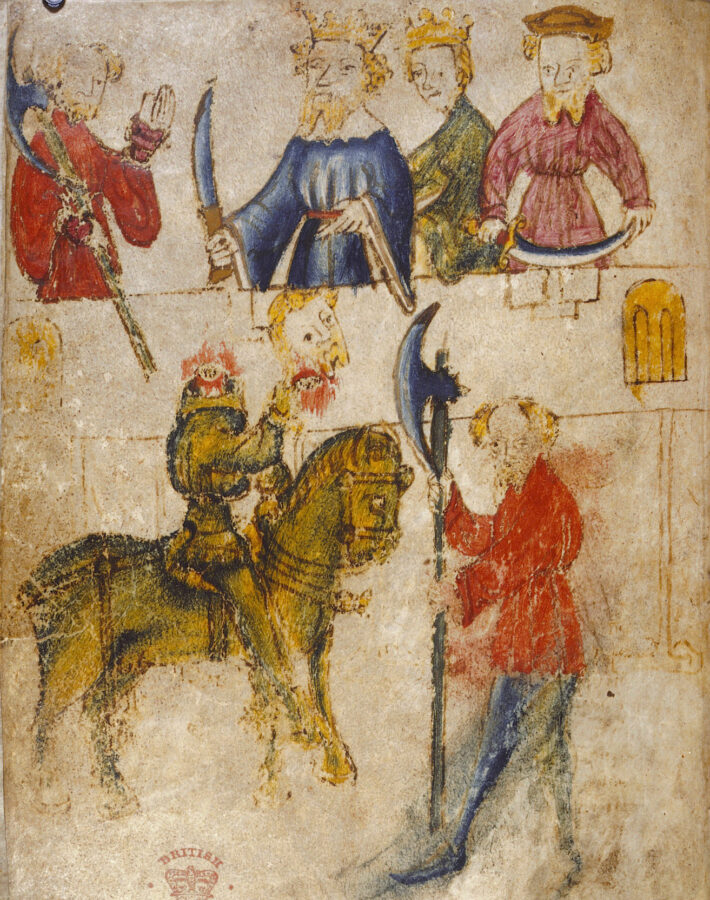
“This kyng lay at Camylot upon Cristmasse,
With rich revel aright and rechlesse mirthes.”
It was Christmas at Camelot and the long fifteen-day celebrations of feasting, dancing and playing games were in full swing at the court of King Arthur when suddenly, at new year, a mysterious knight (“overal enker grene” – entirely vivid green) appears. The stranger issues a challenge to the king’s knights: he will withstand any blow from any knight, provided that in a year and a day’s time the Green Knight may return the blow. When Sir Gawain takes up this challenge and strikes off the Green Knight’s head, he unleashes a series of events which threaten not only his knighthood and the raison d’être of Arthur’s court but disturb his understanding of himself and the world he inhabits.
Sir Gawain and the Green Knight is a perfect read for the winter season, as Gawain sets off at in November to seek out the Green Knight and receive the return-blow. He travels through snow-bound landscapes, where cold streams come clattering down from cliff-tops and hang high above his head in hard icicles, and un-blithe birds upon bare twigs piteously pipe at the pain of the cold, a cold which the poet counterpoints with the warmth of hospitality and festivity celebrated in the castle where Gawain finds rest over Christmas before his final confrontation with the Green Knight.
On the surface, Sir Gawain and the Green Knight appears to be a simple story of magic and adventure, but it is recognised as a great masterpiece of medieval literature, exhibiting keen and subtle psychological depth, and displaying rich and intricate literary artistry. Join us to journey with Gawain as he navigates the cold of winter, the otherness of the Green Knight and his other-worlds, and the complexities of medieval courtly love and fidelity.
The medieval English dialect of the poem is not straightforward. For this study we will be using the acclaimed translation into modern English by poet laureate Simon Armitage, with occasional forays into the original Middle English. The recommended edition is Simon Armitage, Sir Gawain and the Green Knight, Faber & Faber, 2007. ISBN 978-0-571-22328-2.
JOINING DETAILS:
- Four meeting study led by Tim Swinglehurst live on Zoom
- Wednesday 25 November, 2, 9 &16 December, 6.00-8.00 pm (UK time)
- £160 for four meetings, to include background materials and resources
- Recommended edition: Simon Armitage, Sir Gawain and the Green Knight, Faber & Faber, 2007, ISBN 978-0-571-22328-2.
Organizer
Time
Location
LIVE ON ZOOM
Future Event Times in this Repeating Event Series
Book this Salon
January 2027
Event Details
William Blake, The Casting of the Rebel Angels into Hell,
Event Details

‘Better to reign in Hell, than serve in Heaven’
Join Dr. Julie Sutherland in an engaging and rewarding study of Book II of John Milton’s Paradise Lost, the second standalone study in a slow read through the 17th-century writer and rebel’s great epic. In this gripping section of Milton’s cinematic retelling of the fall of Lucifer and humankind, readers experience a clamouring debate in Pandemonium (a word coined by the poet himself) as the fallen angels recalibrate in Hell.
This immersive study is structured as a shared reading experience, where participants will read every line of the fascinating book aloud, pausing regularly for discussion. Along the way, we will explore Milton’s portrayal of Satan and the fallen angels, the epic’s opening vision of Hell, and some of the poem’s central themes, including freedom, rebellion, authority and ambition.
JOINING DETAILS:
- Four-meeting study led by Dr Julie Sutherland live on Zoom
- Tuesdays, 5 – 26 January 2027, 6.00-8.00 pm (UK time)
- £160.00 for four meetings
- We will use the Penguin Classics edition: Paradise Lost by John Milton, edited by John Leonard (ISBN-10: 9780140424393)
Organizer
Time
Location
LIVE ON ZOOM
Future Event Times in this Repeating Event Series
Book this Salon
Event Details
Written just
Event Details

Written just three decades after Shakespeare’s Romeo and Juliet, John Ford’s (1586 – circa 1639) provocative and psychologically penetrating tragedy ’Tis Pity She’s a Whore enters into a striking conversation with that earlier tragedy. Both plays explore forbidden love, divided loyalties, family conflict, secrecy, and the destructive consequences of a society that cannot accommodate the desires of its young.
Yet where Shakespeare often places passionate lovers within a world of feuding families and social constraint, Ford turns our attention even more intensely inward. What happens when desire becomes inseparable from obsession? How do guilt, fantasy, self-deception and the longing for absolute emotional union shape human behaviour?
Join Dr Julie Sutherland in this seven-week study, where we will explore Ford’s acute insight into the inner workings of the human mind, as well as his capacity to animate those dark interior places where love, desire, conscience and reason collide.
JOINING DETAILS:
- Seven-meeting study, live on Zoom, led by Julie Sutherland
- Wednesdays, 6 January to 17 February, 5.00-7.00 pm (UK time)
- Recommended edition: ‘Tis Pity She’s a Whore by John Ford, edited by Sonia Massai, Arden Early Modern Drama, ISBN: 978-1904271505
- £245 for seven two-hour meetings, to include background notes and resources
Organizer
Time
Location
LIVE ON ZOOM
Future Event Times in this Repeating Event Series
Book this Salon
Event Details
Pottery Fan: photo of greek art created about 500 BC
Event Details

“Sing to me of the man, Muse, the man of twists and turns
Driven time and again off course, once he had plundered
The hallowed heights of Troy.”The opening lines of The Odyssey, translated by Robert Fagles
“Achilles’ wrath, to Greece the direful spring
Of woes unnumber’d, heavenly goddess sing!”The opening lines of The Iliad, translated by Alexander Pope
The stunning grandeur of Christopher Nolan’s film The Odyssey has provoked extraordinary interest in Homer’s epic: sales of translations are up manyfold.
We in the London Literary Salon are no strangers to the poem which, along with its sister epic The Iliad, has been the subject of many studies, recently in translations by Robert Fagles, Emily Wilson and Daniel Mendelsohn. If you have ever wondered what it may be like to read these great epics in the original language, now is your opportunity to find out!
Starting in January 2027, we are offering a course in Homeric Greek, consisting of three sets of 10 ninety minute sessions spread out over the year. Led by Tim Swinglehurst, our aim will be to read (however slowly) through as much of the first book of The Iliad as possible – a very good place to start reading through Homer! As Clyde Pharr (who wrote Homeric Greek: A Book for Beginners) has said, the student who achieves a read-through of The Iliad Book 1 “has come into vital contact with the magic and music of the Greek language, used in one of the most beautiful, one of the most varied, and one of the most influential compositions of all ages”.
In that first book we will leap into the explosive argument between Achilles and Agamemnon which, in its intensity and ferocity, places the nine-year conflict between Greeks and Trojans very much into the shade; we will stand upon the shore of the “wine-dark sea” to share in the moving encounter between Thetis, tender and compassionate mother, and Achilles, enflamed but tearful son; finally, we will take our seats on Mount Olympus to view the eternal bickering and eternal feastings of the eternal gods.
μῆνιν ἄειδε θεὰ Πηληϊάδεω Ἀχιλῆος
οὐλομένην, ἣ μυρί’ Ἀχαιοῖς ἄλγε’ ἔθηκε.
“Rage – Goddess, sing the rage of Peleus’ son Achilles,
Murderous, doomed, that cost the Achaeans countless losses.”
The opening lines of The Iliad, translated by Robert Fagles
JOINING DETAILS:
- A series of three ten-meeting studies, each session 90 minutes, led by Tim Swinglehurst live on Zoom.
- Block 1: Sundays 4.00-5.30 pm (UK time), 10 January – 14 March 2027 (please note that we may make one Sunday a break and extend the run to 21 March if all participants agree).
- £100 for ten-meetings (£10.00 per 90 minute session).
- Required text: Homeric Greek: A Book for Beginners (Fourth Edition) by Clyde Pharr, revised by John Wright and Paula Debnar, University of Oklahoma Press, ISBN: 978-0806141640.
- On Sunday 11 October, 4.00-5.00 pm (UK time), we are offering an introductory session on Zoom for registrants and we will follow up with one or two more sessions before Christmas. We are encouraging participants to learn the alphabet as soon as possible (especially the lower case letters) and to begin to read some Greek words aloud ahead of the start of the study. We will provide more information and resources to participants on registration.
Organizer
Time
Location
LIVE ON ZOOM
Future Event Times in this Repeating Event Series
Book this Salon
Event Details
The Pesaro Madonna by Titian
Event Details

Discover the colourful, sensual and spiritual world of the Venetian Renaissance. In contrast to the linear style of the Florentines, Venetian painters emphasised light and colour. Venice was a crossroads of East and West, with trade that brought a variety of dyes and pigments such as Ultramarine (literally translated as “beyond the sea” ) which the Venetians used for their rich textiles and great oil paintings in churches and palazzos.
In this Salon study we will trace the development of painting in 16th-century Venice — Giovanni Bellini, Giorgione, Titian, Tintoretto and Veronese. We will also look at the city itself, with its unique combination of Gothic and Classical architecture — the Gothic grandeur of San Marco and the Ca d’Oro beside Palladio’s grand churches San Giorgiore Maggiore and Il Redentore. Finally, we will explore the music of Claudio Monteverdi, opera’s first master — we will listen to and discuss some of his madrigals and selections from L’Orfeo.
Over six meetings we will cover the following artists and subjects:
1. Bellini; Giorgione
2. Titian I; Carpaccio
3. Titian II
4. Tintoretto; Veronese
5. Architecture – Ruskin, Palladio
6. Music – Monteverdi
JOINING DETAILS:
- Six meetings led by Sean Forester live on Zoom
- Mondays, 11 January – 22 February 2027, 6.00-8.00 pm (UK). Please note, NO meeting on Monday 15 February.
- Sean Forester will provide a Padlet showing the artworks
- Recommended (but not required) reading:
Painting in Renaissance Venice by Peter Humfrey, ISBN: 978-0300067156
Venice: Art & Architecture by Marion Kaminski, ISBN: 978-3848003235 - £240 for six meetings
Organizer
Time
Location
LIVE ON ZOOM
Future Event Times in this Repeating Event Series
Book this Salon
Event Details
In the more than 100 years since it was first published on 2 February 1922
Event Details
In the more than 100 years since it was first published on 2 February 1922 – James Joyce’s 40th birthday – Ulysses has sometimes been described as ‘unreadable’ and is frequently listed as ‘the book I’m ashamed (or regretful) not to have read’. And yet it came in at number 3 in the Guardian’s recent list of The 100 Best Novels of All Time and at number 10 in the follow-up Readers’ top 100 novels of all time. It is now 20 years since Salon founder Toby Brothers first led a group reading this extraordinary and challenging work, and in 2027 we are again offering the opportunity to join her in guiding a group of committed and curious readers through the pages. Join us if you can, and bear in mind the words of the great American novelist William Faulkner:
“You should approach Joyce’s Ulysses as the illiterate Baptist preacher approaches the Old Testament: with faith.”
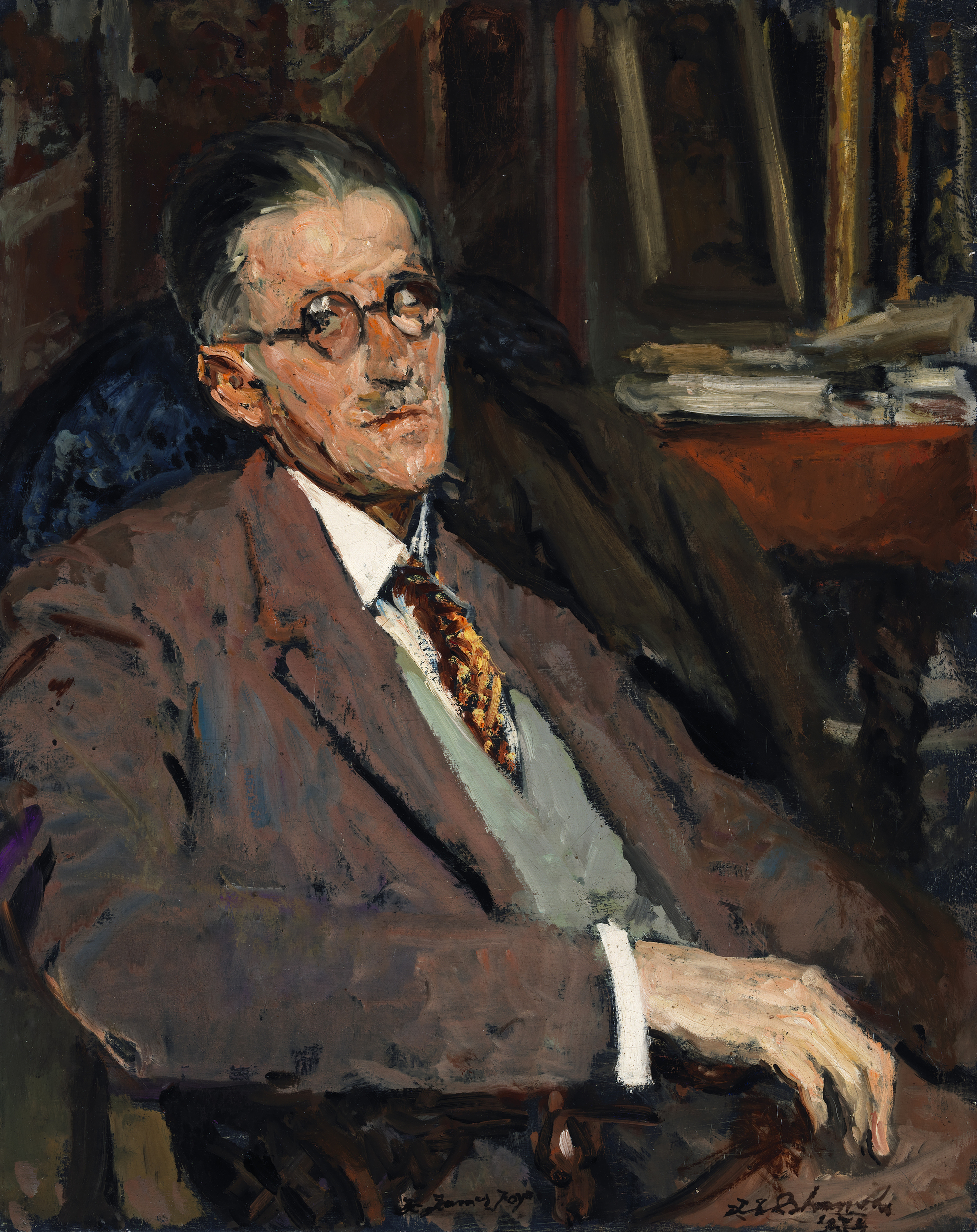
“. . . Joyce’s contribution to a new way of writing particularly as it affects narrative theory, the role of the reader, and how stories are told from inside the consciousness of the individual. So both the external world we associate with history and the internal world that rightly belongs to the private world of consciousness are redrawn by Joyce in a manner that is both original and at times dependent on sources outside the novel.”
David Pierce in Joyce’s Portrait: A New Reading
Widely acknowledged today as one of the greatest novels of all time, UIysses was immediately controversial on publication, described by one Irish critic as “The most infamously obscene book in ancient or modern literature”. Our study is suitable both for people who have not yet entered the pages of Ulysses and those who have already read it at least once. Our work with this book will widen your perspective and deepen your experience of the power of language.
There are many good reasons for studying this huge and sometimes intimidating text, but you will only know for yourself by diving in. Toby believes the best way to study it is with a group of hungry, curious fellow readers who all contribute to evoking meaning through their questions and insights, she explains:
“The good news: reading Ulysses is fun. And I don’t mean in a frustrating, overly-analytical see-how-much-you-know-way. The language is amazing – even when I don’t understand it. Perhaps, especially when I don’t understand it, because meaning sneaks in through more than my critical faculty. Meaning slides in through sound, through the lushness of the language, through the filmy and substantial images, and suddenly I find myself transported from a walk on a beach to a contemplation of the origins of man. Thank you James Joyce.”
Any time spent studying Joyce leaves one a better reader – a broader thinker – even if all the references, repetitions, epiphanies and allusions are not immediately understood.
Here are comments from two Ulysses participants:
“I am thoroughly enjoying this journey. I feel wide open, exposed and receptive to new ways of thinking. What could be better than that? I enjoy the links with the classics and their current counterparts such as the agony of Sisyphus and the trials of thoughtful, surely sad, Martin Cunningham. And then Bloom with his many pockets reminded me in an amusing way of the Artful Dodger.
“Joining the Ulysses salon was one of the best things I have ever done. This was a book I had wanted to read for years but never got past the first section. I had no idea what the salon would be like and was very apprehensive about joining up. But Toby so skilfully guided us through it, her knowledge of the text seemingly inexhaustible, that with her warmth and generosity and sensitivity she got everyone involved and the satisfaction of participating in the salon and in getting an understanding of this marvellous work was immense.“
JOINING DETAILS:
- We are offering this study from 12.00 – 2.00 pm (UK time) with an alternative option later in the day (5.30 – 7.30 pm)
- The study will comprise 21 meetings led by Toby Brothers starting on Tuesday 12 January and finishing on Tuesday 15 June 2027, with four possible Sunday afternoon meetings (4.30-6.30pm on 31 January, 28 February, 14 March and 30 May) and NO meetings on 4 and 11 May.
- The total cost for the 21 meeting study, with all notes and resources materials, is £575
- Please purchase these editions in preparation for our study:
- Ulysses, by James Joyce, Annotated Students’ Edition, Penguin Modern Classics 2011, ISBN: 9780141197418. There are many editions of Ulysses — I find this edition is most coherent and the notes and introduction by Declan Kieberd very helpful; as we will constantly be referencing particular passages, having the same edition will be extremely useful.
- The New Bloomsday Book: A Guide Through Ulysses, by Harry Blamires, ISBN-10: 0415138582
REDUCED COSTS: we are committed to making our studies as affordable as possible. We have a fund in place to support anyone who would like to register for a study but finds the cost difficult to afford. We can’t promise to help, but please email us at litsalon@gmail.com in confidence if you would like to request a reduction in the cost of a study.
Organizer
Time
Location
VIRTUAL - ON ZOOM
Future Event Times in this Repeating Event Series
Book this Salon
All places are booked
Event Details
Event Details
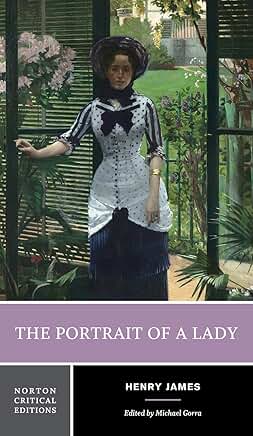
According to writer and academic Michael Gorra, author of Portrait of a Novel: Henry James and the Making of an American Masterpiece, this is the novel in which Henry James first allowed his imagination full stretch. It was certainly his first big success and remains the most popular of all his longer works.
The Portrait of a Lady tells the story of Isabel Archer, a young American woman arriving in Europe with money, independence and a determination to “see life”. She is intelligent, self-confident, perceptive and curious, even though some find her presumptuous and naive! In James’ own words, he is writing about ‘a certain young woman confronting her destiny’.
For most young women in the 1880s that destiny centred on marriage. At the start of the book, it looks as if Isabel is about to accept this by marrying a forceful, prosperous young man in New England, but when this is postponed by an aunt whisking her off to Europe it seems to open up a world of possibilities curiously attractive to Isabel, in much the same way as visiting Europe proved irresistible for Henry James himself.
Henry James seems to identify deeply with the character of Isabel. In his prelude to the book, he quotes George Eliot’s words about young women, ‘In these frail vessels is borne onward through the ages the treasure of human affection’. His admiration for Eliot and his own inclinations clearly combine to lead him to centre his story on a female character, and to raise fundamental questions about what possibilities there are for women to act independently. He probes the influential Emersonian vision of untrammelled self-reliance, inviting us to consider the extent to which a woman can create her own life when convention offers no more than a frame into which she can step, to become an agreeable but mute and unchanging portrait.
In the context of literary history, this novel is often seen as a link between George Eliot and Virginia Woolf, a kind of bridge between Victorian fiction and modernism. This applies to both content and form, as the novel focuses on the drama of the interior life and, according to Michael Gorra, offers ‘the most searching account of the moment-by-moment flow of consciousness that any novelist had yet attempted’.
For all the possibilities of intellectual engagement with the book, we should never forget the power it has to make us believe in, care for and be deeply moved by the troubled life of the central character. Isabel hopes for life, liberty and the pursuit of happiness, but Henry James’ novels always warn us of the difficulty of achieving these goals in the face of the powerful influence on human affairs of money and deceit. There are elements of the fairy tale in this novel, but don’t expect it to have a happy ending.
JOINING DETAILS:
- 8 meeting study, live on Zoom, led by Keith Fosbrook and Sarah Snoxall
- Tuesdays, 12 January – 2 March 2027, 5.00-7.00 pm (UK time)
- Recommended edition: The Portrait of a Lady by Henry James, edited by Michael Gorra, Norton Critical Edition, ISBN: 978-0393938531
- £320 for eight two-hour meetings
REDUCED COSTS: we are committed to making our studies as affordable as possible. We have a fund in place to support anyone who would like to register for a study but finds the cost difficult to afford. We can’t promise to help, but please email us at litsalon@gmail.com in confidence if you would like to request a reduction in the cost of a study.
Time
Location
LIVE ON ZOOM
Future Event Times in this Repeating Event Series
Book this Salon
All places are booked
Event Details
In the more than 100 years since it was first published on 2 February 1922
Event Details
In the more than 100 years since it was first published on 2 February 1922 – James Joyce’s 40th birthday – Ulysses has sometimes been described as ‘unreadable’ and is frequently listed as ‘the book I’m ashamed (or regretful) not to have read’. And yet it came in at number 3 in the Guardian’s recent list of The 100 Best Novels of All Time and at number 10 in the follow-up Readers’ top 100 novels of all time. It is now 20 years since Salon founder Toby Brothers first led a group reading this extraordinary and challenging work, and in 2027 we are again offering the opportunity to join her in guiding a group of committed and curious readers through the pages. Join us if you can, and bear in mind the words of the great American novelist William Faulkner:
“You should approach Joyce’s Ulysses as the illiterate Baptist preacher approaches the Old Testament: with faith.”
“. . . Joyce’s contribution to a new way of writing particularly as it affects narrative theory, the role of the reader, and how stories are told from inside the consciousness of the individual. So both the external world we associate with history and the internal world that rightly belongs to the private world of consciousness are redrawn by Joyce in a manner that is both original and at times dependent on sources outside the novel.”
David Pierce in Joyce’s Portrait: A New Reading
Widely acknowledged today as one of the greatest novels of all time, UIysses was immediately controversial on publication, described by one Irish critic as “The most infamously obscene book in ancient or modern literature”. Our study is suitable both for people who have not yet entered the pages of Ulysses and those who have already read it at least once. Our work with this book will widen your perspective and deepen your experience of the power of language.
There are many good reasons for studying this huge and sometimes intimidating text, but you will only know for yourself by diving in. Toby believes the best way to study it is with a group of hungry, curious fellow readers who all contribute to evoking meaning through their questions and insights, she explains:
“The good news: reading Ulysses is fun. And I don’t mean in a frustrating, overly-analytical see-how-much-you-know-way. The language is amazing – even when I don’t understand it. Perhaps, especially when I don’t understand it, because meaning sneaks in through more than my critical faculty. Meaning slides in through sound, through the lushness of the language, through the filmy and substantial images, and suddenly I find myself transported from a walk on a beach to a contemplation of the origins of man. Thank you James Joyce.”
Any time spent studying Joyce leaves one a better reader – a broader thinker – even if all the references, repetitions, epiphanies and allusions are not immediately understood.
Here are comments from two Ulysses participants:
“I am thoroughly enjoying this journey. I feel wide open, exposed and receptive to new ways of thinking. What could be better than that? I enjoy the links with the classics and their current counterparts such as the agony of Sisyphus and the trials of thoughtful, surely sad, Martin Cunningham. And then Bloom with his many pockets reminded me in an amusing way of the Artful Dodger.
“Joining the Ulysses salon was one of the best things I have ever done. This was a book I had wanted to read for years but never got past the first section. I had no idea what the salon would be like and was very apprehensive about joining up. But Toby so skilfully guided us through it, her knowledge of the text seemingly inexhaustible, that with her warmth and generosity and sensitivity she got everyone involved and the satisfaction of participating in the salon and in getting an understanding of this marvellous work was immense.“
JOINING DETAILS:
- We are offering this study from 5.30 – 7.30 pm (UK time) with an alternative option earlier in the day (12.00-2.00 pm UK)
- The study will comprise 21 meetings led by Toby Brothers starting on Tuesday 12 January and finishing on Tuesday 15 June 2027, with four possible Sunday afternoon meetings (4.30-6.30pm on 31 January, 28 February, 14 March and 30 May) and NO meetings on 4 and 11 May.
- The total cost for the 21 meeting study, with all notes and resources materials, is £575
- Please purchase these editions in preparation for our study:
- Ulysses, by James Joyce, Annotated Students’ Edition, Penguin Modern Classics 2011, ISBN: 9780141197418. There are many editions of Ulysses — I find this edition is most coherent and the notes and introduction by Declan Kieberd very helpful; as we will constantly be referencing particular passages, having the same edition will be extremely useful.
- The New Bloomsday Book: A Guide Through Ulysses, by Harry Blamires, ISBN-10: 0415138582
REDUCED COSTS: we are committed to making our studies as affordable as possible. We have a fund in place to support anyone who would like to register for a study but finds the cost difficult to afford. We can’t promise to help, but please email us at litsalon@gmail.com in confidence if you would like to request a reduction in the cost of a study.
Organizer
Time
Location
VIRTUAL - ON ZOOM
Future Event Times in this Repeating Event Series
Book this Salon
All places are booked
Event Details
Event Details

SHORTLISTED FOR THE 2026 BOOKER PRIZE FOR FICTION
THE WINNER WILL BE ANNOUNCED IN LONDON ON MONDAY 9 NOVEMBER 2026
This moving and deceptively understated book has at its core this assertion by its omniscient narrator:
‘So blind we humans are – so blind. To each other and to ourselves, moving through life as though through shadows, putting out a hand in the dark and thinking we have touched someone …But mostly we travel through life unsighted, grasping only the smallest details of one another’s selves, including our own.’
The central character of The Things We Never Say, Artie Dam, a high school teacher in coastal Maine, sees his comfortable, well-ordered world (albeit one with the distant braying sounds of the Trump presidency becoming more strident) begin to fracture: first slowly, then with increasing speed.
The book’s epigraph is taken from Jung:
‘Loneliness does not come from having no people about one, but from being unable to communicate the things that seem important to oneself, or from holding certain views which others find inadmissible.’
Elizabeth Strout is the Pulitzer prize-winning author of novels greatly admired for their profound and perceptive evocation of contemporary lives, including My Name is Lucy Barton and Olive Kitteridge. Based in Maine, she has been nominated for the Booker Prize three times, as well as for the PEN/Faulkner Award and the Orange Prize. The judges of the 2026 Booker Prize described The Things We Never Say as ‘A devastating look at the dangerous cracks in family life and in the contemporary world at large. Strout’s prose is brilliantly understated and all the more powerful for that’.
Over three meetings we will discuss how Strout weaves the themes of grief, isolation, love and friendship into a seemingly simple story that speaks to us all about the essence of what it is to be human in the twenty-first century.
JOINING DETAILS:
- Three-meeting study led by Jane Wymark
- Mondays, 12, 19 & 26 January 2027, 6.00-8.00 pm (UK time)
- £120.00 for three meetings, including background notes and resources
- The Things We Never Say is published by Viking, ISBN: 9780241814307 (N.B. the paperback edition is not due for publication until June 2027)
Organizer
Time
Location
LIVE ON ZOOM
Future Event Times in this Repeating Event Series
Book this Salon
Event Details
Gerard Manley Hopkins, Public domain, via Wikimedia Commons
Event Details

“As kingfishers catch fire, dragonflies draw flame;
As tumbled over rim in roundy wells
Stones ring . . .”
When Hopkins entered a religious order in 1868 he destroyed his poetry, but fortunately he continued to send poems to his friend Robert Bridges. When Bridges eventually published the poems in 1918, nearly 30 years after Hopkins’ death, he revealed to the world one of the most startling and innovative poetic voices of the 19th century.
Hopkins’ poems explore intense emotion and the musicality of language; they are rich in alliteration, assonance, onomatopoeia and rhyme, and exhibit Hopkins’ distinctive theories about rhythm and the energy of poetry. Many of his poems delight in the beauty and intricate detail of the natural world and the glorious singularity of birds and insects and human beings. Other poems, discovered after his death, grapple with questions of desolation, doubt and despair.
In this two-week salon, we will, among other brief extracts from Hopkins poetry, consider the particularity of place, person and profession in Duns Scotus’s Oxford and Felix Randal; watch what happens when kingfishers catch fire and dragonflies draw flame; and enter into a ‘dark and comfortless’ Sonnet of Desolation: No worst, there is none…).
“No worst, there is none. Pitched past pitch of grief,
More pangs will, schooled at forepangs, wilder wring.
Comforter, where, where is your comforting?”
JOINING DETAILS:
- Two-meeting study, live on Zoom, led by Tim Swinglehurst
- Thursdays, 14 & 21 January 2027, 6.00-8.00 pm (UK time)
- £80 for 2 two-hour meetings
- Recommended edition: Gerard Manley Hopkins: Poems and Prose, selected and with an Introduction and Notes by W.H. Gardner, Penguin Books, 2008, ISBN-13: 978-0-140-42015-9. Tim will also send out links to the individual poems to be studied.
- This salon will act as a taster for a more in-depth study of Hopkins’ poetry which Sean Forester will offer on Thursday 4, 11, 18 & 25 February, 6.00-8.00pm (UK time).
REDUCED COSTS: we are committed to making our studies as affordable as possible. We have a fund in place to support anyone who would like to register for a study but finds the cost difficult to afford. We can’t promise to help, but please email litsalon@gmail.com in confidence if you would like to request a reduction in the cost of a study.
Organizer
Time
Location
LIVE ON ZOOM
Future Event Times in this Repeating Event Series
Book this Salon
Event Details
Event Details
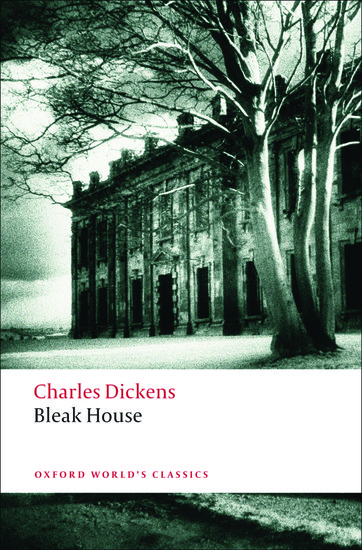
With Bleak House, Charles Dickens sharpened his satire to its finest point and never looked back. First published in monthly parts between 1852 and 1853, it is Gothic in atmosphere, labyrinthine in structure, and merciless in its central argument: that institutions designed to dispense justice can, given sufficient time and indifference, become engines of pure destruction.
At the heart of the novel sits Jarndyce and Jarndyce, a suit in Chancery — the English court of equity — that has been grinding through the system for so long that no living person can remember what it was originally about. It concerns an inheritance. Or several inheritances. Or possibly none at all. By the time we encounter it, the case has consumed fortunes, ruined lives, and become its own self-perpetuating institution: a monument to procedural delay so vast and so perfectly constructed that it requires no villain to sustain it. The system does that work entirely on its own.
Around this vortex, Dickens assembles one of the largest casts in English fiction. There is Esther Summerson, our narrator for half the novel — orphaned, self-effacing, unreliable in ways she cannot see, and, it is hard not to notice, rather more interested in Ada Clare than in any of the men who pursue her. There is Lady Dedlock, magnificent and glacial, with a secret that will undo her. There is Tulkinghorn, the family solicitor, a man who collects other people’s secrets the way other men collect art. There is Inspector Bucket, one of the first detectives in English literature, pursuing a truth that will satisfy no one. And there is Jo, the crossing-sweeper: a child who cannot read, does not know where he was born, and is moved on by every authority he encounters until there is nowhere left to move him.
The fog that opens the novel is Chancery made weather. Dickens’ critics considered the novel’s famous use of spontaneous combustion preposterous. He considered it a defensible metaphor. Both were right.
At a moment when courts are being asked to hold the line against executive power — and when the question of whether they can is genuinely open — Dickens’ portrait of a legal system that defeats justice through its own internal logic has never felt more urgent. Bleak House understands, with absolute clarity, how a system staffed by reasonable individuals and governed by elaborate rules can produce outcomes that are neither reasonable nor just. It understands how delay functions as a weapon. It understands how the people with the least recourse are the most reliably destroyed.
Dickens knew that the cruellest thing a corrupt system can do is not to break its own rules. It’s to follow them perfectly.
Let us read.
JOINING DETAILS:
- Ten-meeting study, live on Zoom, led by Dr Nancy Goldstein
- 14 January – 18 March 2027
- Thursdays, 6.30–8.30 pm (UK time)
- £400 for ten two-hour meetings
- Recommended edition: Bleak House, Oxford World’s Classics, edited with an introduction and notes by Stephen Gill, ISBN: 9780199536313.
REDUCED COSTS: we are committed to making our studies as affordable as possible. We have a fund in place to support anyone who would like to register for a study but finds the cost difficult to afford. We can’t promise to help, but please email us at litsalon@gmail.com in confidence if you would like to request a reduction in the cost of a study.
Organizer
Time
Location
LIVE ON ZOOM
Future Event Times in this Repeating Event Series
Book this Salon
April 2027
Event Details
We are now planning for 2027 and our sixth visit to the enchanting island of Agistri
Event Details
We are now planning for 2027 and our sixth visit to the enchanting island of Agistri in the Saronic Gulf, where we read the classical literature of Ancient Greece. Over three week-long studies, we will study Homer’s Odyssey, Euripides’ Medea, and The Bacchae by Euripides with Aristophanes’ The Birds. Reading these extraordinary and enduring works in the midst of this land and seascape can only deepen and enrich our experience of the texts. Do take a look at our ‘Gallery’ page and below to see photos from our previous studies on the island.

First performed in 431BCE, as the third – and only surviving – part of a trilogy, Medea remains one of the most-produced Greek tragedies. It is an exploration of the roles of men and women, both actual and ideal, but is it also an argument for sexual equality?
In a monologue addressed to the Chorus – our moral conscience – Medea produces a memorable assertion about a gap in understanding between men and women. She tells us that men
“. . . say that we live a life free from danger at home, while they fight with the spear. They are so wrong! For I would rather take my stand three times with a shield in battle than once give birth to a child.“
We know that in Athens, women were not permitted to exercise legal, economic or social autonomy. How can we therefore explain the fact that the tragic plays that survive often portray them as having influential social and moral force? Can we think of Euripides in particular as a kind of proto-feminist? There are many occasions in Medea and other of his plays when his characters express damning general criticisms of women. Could a ‘proto-feminist’ be also a misogynist?
Medea has already committed two murders, both of them in service of Jason – who subsequently abandons her in favour of a younger and richer woman. The precise details of her plotting of revenge on him are so gruesome that we may struggle to feel sympathy for her. If one wanted to write a play about ‘proto-feminism’, would one not try to make the central character more engaging?
But Euripides is not trying to create a sympathetic character to whom we can relate in an easy, comfortable way. His aim is to confront us with something truly shocking and to explore issues which we might choose to avoid. It is possible to compare Medea with Oedipus, even though the contrasts are obvious: one acts from good intentions and has no idea of the terrible deeds he has done, whereas the other acts from malign intent and knows exactly what terrible things she has done and intends to do. The similarities lie in the way they both dominate their plays, being hardly ever off stage, and act as chief protagonists who determine the course of events, by their bold actions confronting things we might prefer to turn away from. And perhaps this is why Euripides can appear so modern to us. Terrible things breed in broken hearts.
JOINING DETAILS:
- Seven-day study of Euripides’ Medea on the island of Agistri: Thursday 29 April-Thursday 6 May 2027
- Facilitated by Toby Brothers, Jane Wymark and Keith Fosbrook
- Cost: £950 for the Salon study, to include a preparatory meeting in April (on Zoom, date to be confirmed), background materials and opening notes. Opening notes will be sent after registration.
- The study programme will run for four to five hours per day for five days, with one day left open and travel days at each end (arriving by 17.00 local time on Day 1 and leaving by 09.00 on Day 8). There will be opportunities for other optional activities including kayaking adventures, trips to local sights, or pure relaxation.
- Before you arrive on Agistri we will ask you to read Medea, we recommend the Norton Critical Edition, translated and edited by Sheila Murnaghan, ISBN13: 9780393265453.
- Payment: we ask for an initial (non-returnable) deposit of £100 on registration to secure your place using the booking form below. The balance of £850 will be payable by bank transfer (we will supply bank details), due by 31 January 2027.
- Refunds: please note that any refunds will be entirely at the discretion of the London Literary Salon, dependent on our ability to fill the place, and will be subject to a charge to cover our administration costs.
- Waiting list: if the study sells out early we will maintain a waiting list as we sometimes find that people have to withdraw for reasons beyond their control.
BOOKING & ENQUIRIES:
To ask questions please email us at litsalon@gmail.com using ‘Agistri 2027 – Medea’ as the subject line.
ACCOMMODATION COSTS:
Room and half board (breakfast and dinner each day) will be arranged with the hotel by the individual participant and paid for directly to them. A deposit to cover accommodation for two nights will be required by the hotel on booking. We will send you full contact details for payment on registration. We have set out the anticipated charges below, but these may be subject to change at the time of booking at the discretion of the hotel.
Accommodation prices per night at the hotel – Rosy’s Little Village – are estimated below on the basis of figures available in July 2026 but may be subject to small changes:
- Single – €80 per night plus half board (breakfast and dinner) estimated at €55 per day
- Double – €90 per night plus half board (breakfast and dinner) estimated at €55 per person per day
- Family room for two people – €100 per night plus half board (breakfast and dinner) estimated at €55 per person per day
- Family room for three people – €110 per night plus half board (breakfast and dinner) estimated at €55 per person per day
Please consider sharing accommodation with another participant as this helps us to ensure that everyone can stay on site; double and triple rooms offer split levels and so allow sharers a significant degree of personal privacy.
OTHER ADDITIONAL COSTS TO BUDGET FOR:
Flights to Athens: when booking please make sure you can arrive at the port of Piraeus by 15.00 local time on the first day of your study to catch the ferry. We will not be meeting formally on the final day of the study, so you have choices about your return (ferries are frequent and the travel time to Piraeus is one hour) but participants normally leave Agistri at around 09.00.
Ferry to Agistri: normally around €14 each way.
Incidental expenses: drinks, lunches, extra trips etc.
Insurance: we hope this will be entirely redundant, but we ask you to arrange your own travel and health insurance to protect you in case of anything untoward happening. We will ask you for details of the insurance provider and reference number, as well as your mobile phone number and details of next of kin to add to our (confidential) records for use during the study.
Time
Book this Salon
PAYMENT OF REGISTRATION FEE
The payment of £100 reserves your place on Medea on Agistri. The balance of £850 will be due for payment by bank transfer (we will supply details of the destination account) by 31 January 2027.
All places are booked
May 2027
Event Details
We are now planning for 2027 and our sixth visit to the enchanting island of Agistri
Event Details
We are now planning for 2027 and our sixth visit to the enchanting island of Agistri in the Saronic Gulf to read the classical literature of Ancient Greece. Over three week-long studies, we will study Homer’s Odyssey, Euripides’ Medea, and The Bacchae by Euripides with Aristophanes’ The Birds. Reading these extraordinary and enduring works in the midst of this land and seascape can only deepen and enrich our experience of the texts. Do take a look at our ‘Gallery’ page to see photos from our previous studies on the island.
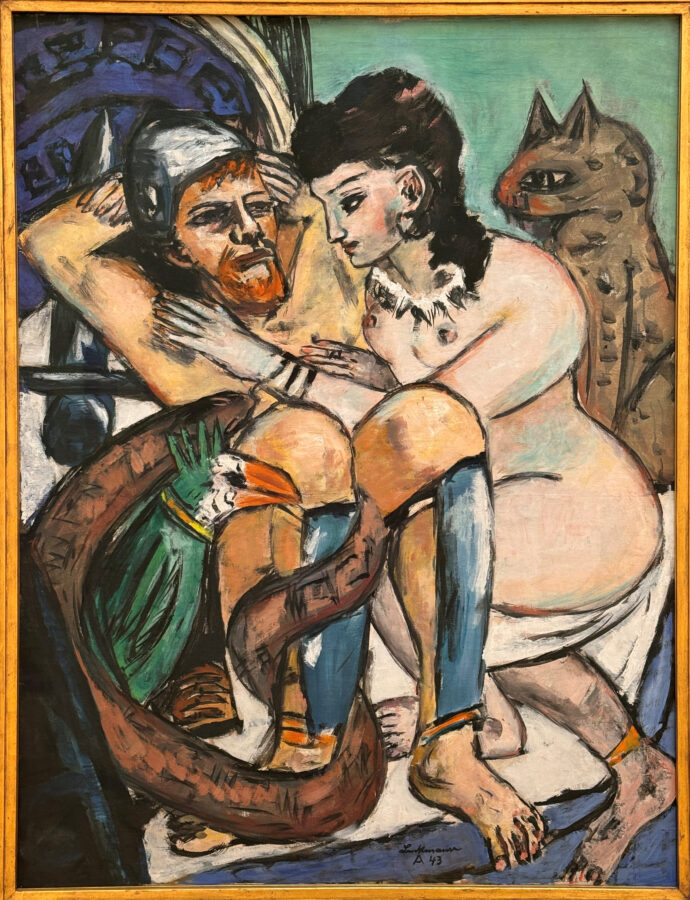
“Sing to me of the man, Muse, the man of twists and turns
driven time and again off course, once he had plundered
the hallowed heights of Troy.
Many cities of men he saw and learned their minds,
many pains he suffered, heartsick on the open sea,
fighting to save his life and bring his comrades home.
But he could not save them from disaster, hard as he strove —
the recklessness of their own ways destroyed them all,
the blind fools, they devoured the cattle of the Sun
and the Sungod wiped from sight the day of their return.
Launch out on his story, Muse, daughter of Zeus,
start from where you will —sing for our time too.”The opening lines of Robert Fagles’ translation of Homer’s Odyssey
In May 2027, for the sixth year running, we’ll be returning to Agistri – our Greek home-from-home – to study Homer’s Odyssey for one week. The Odyssey is a meditation on identity, homecoming, and finding one’s place in the world. Full of complex relationships and characters – including a wealth of compelling female figures – the poem explores hospitality, exile, and what it means to encounter and understand difference. It is also a collection of thrilling adventures, featuring our ‘hero’ pitted against fantastical monsters, seductive sorceresses, and the forces of nature.
The Odyssey continues to inspire artists more than two and a half millennia after it was composed. Christopher Nolan’s extraordinary film adaptation is now introducing the epic to a new generation, offering not a literal translation but a cinematic reimagining that uses the language of film – scale, imagery and narrative – to capture something of the poem’s richness and emotional power. The film is a reminder that Homer’s works are not simply monuments of the ancient world but living stories that continue to invite fresh interpretations.
Homer’s works form the foundation of Western civilisation, and their influence remains very much alive in the modern world; even on a first reading, the characters, themes and events can feel strikingly familiar. Those who have read The Iliad will recognise echoes of its world and witness the continuing stories of many of its central figures, but no prior knowledge is needed. On the island, we’ll be reading Homer in the land where it was composed and performed, where the landscape itself seems to reflect and illuminate the beauty of the language and themes. Each year we find that studying as a residential group creates fresh, rich understandings and new connections with both the work and one another.
This will be the fourth time we embark on reading the vivid and gripping Odyssey on Agistri. Our study will use Homer’s epic poem to explore closely the guest-host relationship, the defining struggle of humans against overwhelming nature, the experience of selfhood in foreign spaces, our understanding of the heroic, and the role of myth and epic in lived experience. Facilitators for the study are Salon Director Toby Brothers, together with Alison Cable and Susanna Taggart. Susanna, who combines her love of Ancient Greek literature with her professional life as a clinical psychologist, will bring to the discussion insights into the psychological challenges of post-combat living for returning soldiers, their loved ones, and communities.
As a complement to the textual study, writer and facilitator Alison Cable will lead a creative workshop inspired by Penelope, who weaves as an act of both duty and quiet resistance. Through a gentle introduction to off-loom weaving, participants will experience the rhythm of warp and weft as a way of thinking about pattern, connection and making. Alongside this hands-on exploration, through creative writing we will invite participants to weave words together in response to The Odyssey and its enduring themes. The landscape, visual art, poetry, and conversations throughout the week may also offer further inspiration for creative reflection.
The venue we have chosen for our stay on the beautiful and quiet island of Agistri is a small family-run hotel, easily accessible (just one hour by ferry from Athens). It provides the perfect setting for our study, offering a relaxing atmosphere, excellent food and opportunities for additional cultural and recreational activities. As one former participant commented: “The beauty and pleasure of the surroundings soothed my soul, leaving me feeling refreshed and connected to the literature and the group in ways I couldn’t have experienced at home.” Do come and join us!

JOINING DETAILS:
- Seven-day study of Homer’s Odyssey on the island of Agistri: Saturday 8-Saturday 15 May 2027
- Facilitated by Toby Brothers, Alison Cable and Susanna Taggart
- Cost: £950 for the Salon study, to include a preparatory meeting in April (on Zoom, date to be confirmed), background materials and opening notes. Opening notes will be sent after registration.
- The study programme will run for four to five hours per day for five days, with one day left open and travel days at each end (arriving by 17.00 local time on Day 1 and leaving by 09.00 on Day 8). There will be opportunities for other optional activities including kayaking adventures, trips to local sights, or pure relaxation.
- Before you arrive on Agistri we will ask you to read Robert Fagles’ translation of The Odyssey (Penguin Classics, ISBN: 9780140268867). We also recommend listening to Ian McKellen’s audio reading of Robert Fagles’ translation as a great way to experience The Odyssey in preparation for the study.
- Payment: we ask for an initial (non-returnable) deposit of £100 on registration to secure your place using the booking form below. The balance of £850 will be payable by bank transfer (we will supply bank details), due by 31 January 2027.
- Refunds: please note that any refunds will be entirely at the discretion of the London Literary Salon, dependent on our ability to fill the place, and will be subject to a charge to cover our administration costs.
- Waiting list: if the study sells out early we will maintain a waiting list as we sometimes find that people have to withdraw for reasons beyond their control.
BOOKING & ENQUIRIES:
To ask questions please email us at litsalon@gmail.com using ‘Agistri 2027 – Odyssey’ as the subject line.
ACCOMMODATION COSTS:
Room and half board (breakfast and dinner each day) will be arranged with the hotel by the individual participant and paid for directly to them. A deposit to cover accommodation for two nights will be required by the hotel on booking. We will send you full contact details for payment on registration. We have set out the anticipated charges below, but these may be subject to change at the time of booking at the discretion of the hotel.
Accommodation prices per night at the hotel – Rosy’s Little Village – are estimated below on the basis of figures available in July 2026 but may be subject to small changes:
- Single – €80 per night plus half board (breakfast and dinner) estimated at €55 per day
- Double – €90 per night plus half board (breakfast and dinner) estimated at €55 per person per day
- Family room for two people – €100 per night plus half board (breakfast and dinner) estimated at €55 per person per day
- Family room for three people – €110 per night plus half board (breakfast and dinner) estimated at €55 per person per day
Please consider sharing accommodation with another participant as this helps us to ensure that everyone can stay on site; double and triple rooms offer split levels and so allow sharers a significant degree of personal privacy.
OTHER ADDITIONAL COSTS TO BUDGET FOR:
Flights to Athens: when booking please make sure you can arrive at the port of Piraeus by 15.00 local time on the first day of your study to catch the ferry. We will not be meeting formally on the final day of the study, so you have choices about your return (ferries are frequent and the travel time to Piraeus is one hour) but participants normally leave Agistri at around 09.00.
Ferry to Agistri: normally around €14 each way.
Incidental expenses: drinks, lunches, extra trips etc.
Insurance: we hope this will be entirely redundant, but we ask you to arrange your own travel and health insurance to protect you in case of anything untoward happening. We will ask you for details of the insurance provider and reference number, as well as your mobile phone number and details of next of kin to add to our (confidential) records for use during the study.
Time
Location
Agistri, Greece
Book this Salon
PAYMENT OF REGISTRATION FEE
The payment of £100 reserves your place on The Odyssey on Agistri. The balance of £850 will be due for payment by bank transfer (we will supply details of the destination account) by 31 January 2027.
Event Details
We are now preparing for 2027 and our sixth visit to the enchanting island of Agistri
Event Details
We are now preparing for 2027 and our sixth visit to the enchanting island of Agistri in the Saronic Gulf to read the classical literature of Ancient Greece. Over three week-long studies, we will study Homer’s Odyssey, Euripides’ Medea, and The Bacchae by Euripides with Aristophanes’ The Birds. Reading these extraordinary and enduring works in the midst of this land and seascape can only deepen and enrich our experience of the texts. Do take a look at our ‘Gallery’ page and below to see photos from our previous studies on the island.

Join us on Agistri to study a wonderful double bill of tragedy and comedy – The Bacchae by Euripides and The Birds by Aristophanes.
“Light the fiery torch of lightning!
Burn it all, burn it down, burn the whole house of Pentheus!”Euripides, The Bacchae
The Bacchae tells the story of how Dionysus – god of wine, festivity and frenzy – takes revenge on King Pentheus of Thebes for rejecting his power. Dionysus first drives Pentheus insane then lures him to the mountains surrounding Thebes. There Pentheus’ mother and a band of Dionysus’ frenzied female followers take their bloody revenge.
First performed in 406 BCE, The Bacchae is Euripides’ final play and was awarded first prize at the Dionysia festival posthumously. Considered by many to be his finest work, it is revered for the beauty of its language and the complexity with which Euripides addresses the issues of faith and society. There are themes too of a struggle between ‘civilisation’ and primal instincts, as well as suppressed emotions causing a threat to society.
Thomas Macaulay wrote: “The Bacchae is a glorious play. It is often very obscure; and I am not sure that I understand its general scope. But, as a piece of language, it is hardly equalled in the world. And, whether it was intended to encourage or to discourage fanaticism, the picture of fanatical excitement which it exhibits has never been rivalled.”
In Ancient Greece, theatre performances moved from tragedy to comedy, shifting audiences from horror and despair to lightness and joy. Similarly, we’ll move from the high drama of The Bacchae to the satire and wit of The Birds.
In The Birds, Aristophanes tells the story of how two Athenians, Pisthetaerus and Euelpides, leave the world of men in search of a city without pettiness and corruption to live in peace and justice. They search for Tereus, a king who has managed to change himself into a hoopoe, or so he says, and married a nightingale. Together with the birds, they establish a state in the ether and build a wall between men and the gods. The work of building their prototype community is interrupted by various Athenians keen to interfere, including a poet, a seer and a town planner. Finally, a delegation from the gods, outraged by the loss of access to their human supplicants, arrives for a final showdown.
First performed in 414 BCE, The Birds is acclaimed for the completeness of the fantasy world created and the lyrical beauty of its depiction of the world of birds. The social satire seems as relevant to modern times as when it was written. And there are some good jokes!
Combining a tragic and a comic play in one study allows us a fresh perspective on the elements of Ancient Greek theatre and insights into how dramatists connected with their audiences and reflected their world back to them.
We’ll be reading The Baachae from The Greek Plays: Sixteen Plays by Aeschylus, Sophocles, and Euripides (Modern Library Classics, ISBN-10: 0812993004, ISBN-13: 978-0812993004) but all translations are welcome.
We’ll be reading The Birds by Aristophanes from The Birds and Other Plays: The Knights/Peace/Wealth/The Assembly Women (Penguin Classics, ISBN-13 : 978-0141913223) but all translations are welcome.
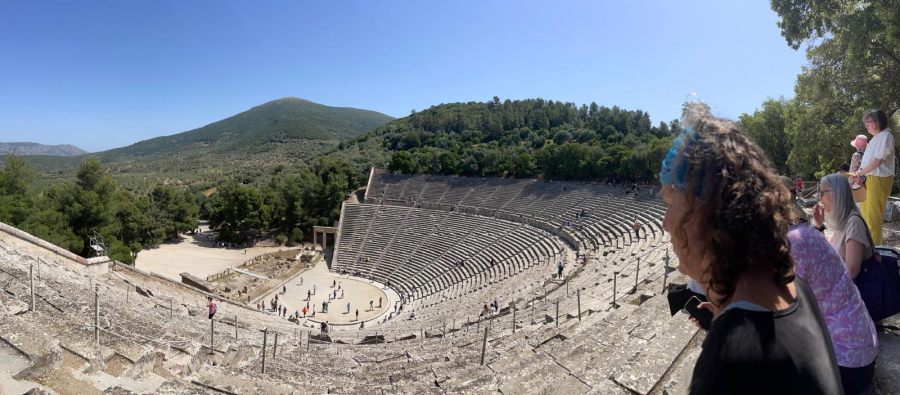
JOINING DETAILS:
- Seven-day study of Euripides’ The Bacchae and Aristophanes’ The Birds on the island of Agistri: Monday 17-Monday 24 May 2027
- Facilitated by Toby Brothers, Caroline Hammond and Susanna Taggart
- Cost: £950 for the Salon study, to include a preparatory meeting in April (on Zoom, date to be confirmed), background materials and opening notes. Opening notes will be sent after registration.
- The study programme will run for four to five hours per day for five days, with one day left open and travel days at each end (arriving by 17.00 local time on Day 1 and leaving by 09.00 on Day 8). There will be opportunities for other optional activities including kayaking adventures, trips to local sites, or pure relaxation.
- Before you arrive on Agistri we will ask you to read both The Bacchae and The Birds (recommended editions are given above).
- Payment: we ask for an initial (non-returnable) deposit of £100 on registration to secure your place using the booking form below. The balance of £850 will be payable by bank transfer (we will supply bank details), due by 31 January 2027.
- Refunds: please note that any refunds will be entirely at the discretion of the London Literary Salon, dependent on our ability to fill the place, and will be subject to a charge to cover our administration costs.
- Waiting list: if the study sells out early we will maintain a waiting list as we sometimes find that people have to withdraw for reasons beyond their control.
BOOKING & ENQUIRIES:
To ask questions please email us at litsalon@gmail.com using ‘Agistri 2027 – The Bacchae & Birds’ as the subject line.
ACCOMMODATION COSTS:
Room and half board (breakfast and dinner each day) will be arranged with the hotel by the individual participant and paid for directly to them. A deposit to cover accommodation for two nights will be required by the hotel on booking. We will send you full contact details for payment on registration. We have set out the anticipated charges below, but these may be subject to change at the time of booking at the discretion of the hotel.
Accommodation prices per night at the hotel – Rosy’s Little Village – are estimated below on the basis of figures available in July 2026 but may be subject to small changes:
- Single – €80 per night plus half board (breakfast and dinner) estimated at €55 per day
- Double – €90 per night plus half board (breakfast and dinner) estimated at €55 per person per day
- Family room for two people – €100 per night plus half board (breakfast and dinner) estimated at €55 per person per day
- Family room for three people – €110 per night plus half board (breakfast and dinner) estimated at €55 per person per day
Please consider sharing accommodation with another participant as this helps us to ensure that everyone can stay on site; double and triple rooms offer split levels and so allow sharers a significant degree of personal privacy.
OTHER ADDITIONAL COSTS TO BUDGET FOR:
Flights to Athens: when booking please make sure you can arrive at the port of Piraeus by 15.00 local time on the first day of your study to catch the ferry. We will not be meeting formally on the final day of the study, so you have choices about your return (ferries are frequent and the travel time to Piraeus is one hour) but participants normally leave Agistri at around 09.00.
Ferry to Agistri: normally around €14 each way.
Incidental expenses: drinks, lunches, extra trips etc.
Insurance: we hope this will be entirely redundant, but we ask you to arrange your own travel and health insurance to protect you in case of anything untoward happening. We will ask you for details of the insurance provider and reference number, as well as your mobile phone number and details of next of kin to add to our (confidential) records for use during the study.
Time
Book this Salon
The payment of £100 reserves your place on The Bacchae and The Birds on Agistri. The balance of £850 will be due for payment by bank transfer (we will supply details of the destination account) by 31 January 2027.
July 2027
Event Details
Event Details

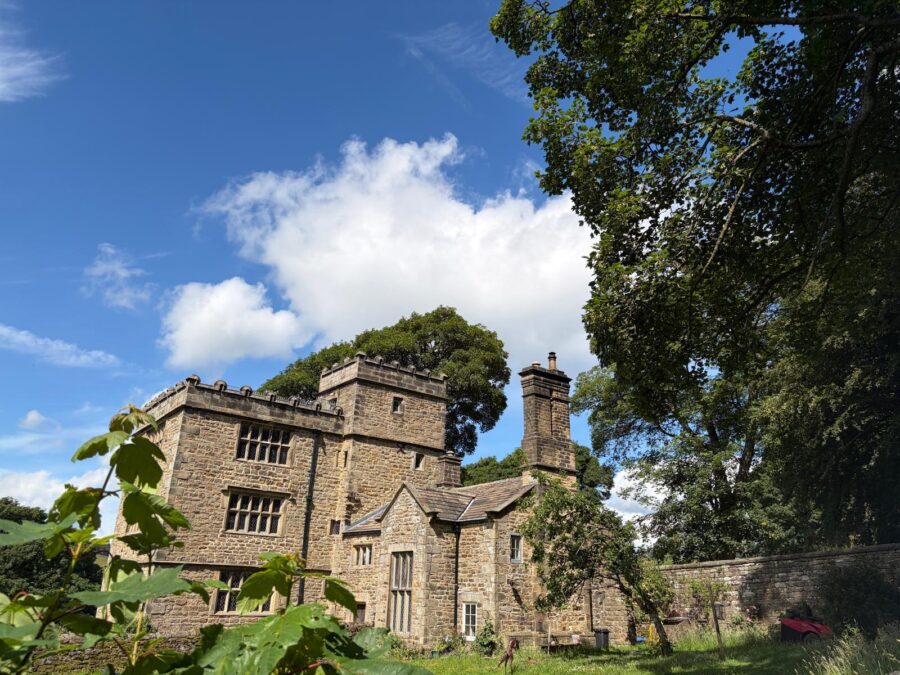
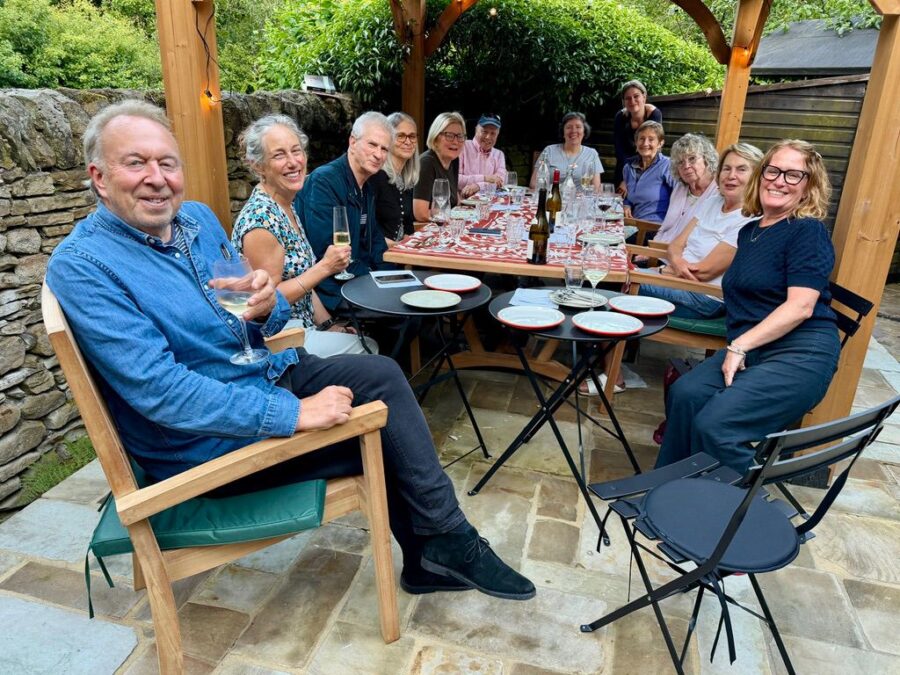
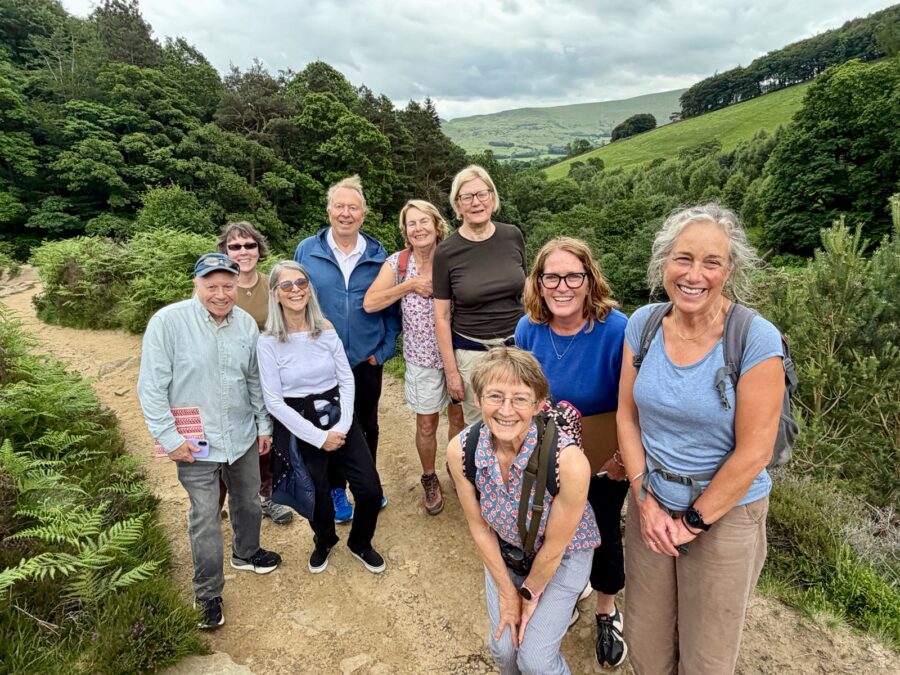
The London Literary Salon offers you the opportunity to join a five-day study based in Edale, in the Peak District National Park in July 2027, where we will explore Charlotte Brontë’s Jane Eyre — an invitation to read, walk and reflect in immersive engagement with Brontë’s novel and the landscape that inspired it.
How might we read Jane Eyre today — as a story of selfhood and rebellion, but also as a text shaped by gender, empire, class and desire? This immersive study combines literary discussion and walking on the moorland paths that inspired Brontë’s novel, with opportunities for morning stretches and reflective writing. A short train trip to Hathersage, the village closely linked to the novel, will offer further insight into the places that inspired Brontë’s writing. Participants may choose to walk the circular 8 km Jane Eyre Hathersage Trail, tracing the village, architecture and landscape that shaped Brontë’s imagination.
Toby Brothers will lead the literary discussions, guiding the group through the rich text with reflections that include psychological, feminist, postcolonial and queer readings of Jane Eyre. Alison Cable will co-facilitate and offer walking and creative writing space, encouraging reflection, response and imaginative engagement with both text and landscape. Together, we will explore the familiar and the overlooked: Jane’s struggles for autonomy, the silences within the text, and the ways literature continues to resonate with questions of freedom, identity and justice in our own lives, here and now.
According to the poet, essayist and feminist Adrienne Rich:
‘The concern of the tale is not with social mores, the social mores may occur among the risks and challenges encountered by the protagonist. Neither is it an anatomy of the psyche, the faded chemistry of cosmic forces. It takes its place between the two: between the realm of the given, that which is changeable by human activity, and the realm of the fated, that which lies outside human control: between realism and poetry.
‘The world of the tale is above all a “vale of soul making”, and when a novelist finds herself writing a tale it is likely to be because she is moved by that vibration of experience which underlies the social and political, though it constantly feeds into both of these. In her essay on Jane Eyre, critic Q.D. Leavis perceives the novel’s theme as “. . . an exploration of how a woman comes to maturity in the world of the writer’s youth”. I would suggest that a novel about how a man “comes to maturity in the world of the writers youth” would not be dismissed as lacking in range or in Woolf’s words, “a sense of human problems”. I would suggest further that Charlotte Bronte is writing not a bildungsroman but the life story of a woman who is incapable of saying “I am Heathcliff” because she feels so unalterably herself. Jane Eyre, motherless and economically powerless, undergoes certain traditional female temptations, and finds that each temptation presents itself along with an alternative –the image of a nurturing or principled or spirited woman on whom she can model herself, or to whom she can look for support.‘
Adrienne Rich, Jane Eyre: The Temptations of a Motherless Woman (published in the Norton Critical Edition of Jane Eyre)
While Virginia Woolf wrote that the Brontës:
‘. . . seized those aspects of the earth which were most akin to what they themselves felt or imputed to their characters, and so their storms, their moors, their lovely spaces of summer weather are not ornaments applied to decorate a dull page or display the writer’s powers of observation – they carry on the emotion and light up the meaning of the book.’
Virginia Woolf, The Common Reader (1916)
We will be based in Edale, with accommodation confirmed at The Gathering, a combination of glamping ‘lodges’ and barns, with options for shared or single rooms. Walking across the hills and moors will offer space for thought and inspiration, but all activities are optional: indoors, we will read, write and talk together, fostering immersive engagement with text and the landscape. To round out the evenings, participants may choose to join the local pub quiz, or just take in the lively sense of the village community and place.
SAMPLE SESSIONS INCLUDE:
- Morning and afternoon literary discussions with Toby Brothers and Alison Cable: close reading of key passages, exploring Jane’s journey, moral choices and the novel’s social and political contexts. Short walks with Alison Cable: gentle, reflective walking, with opportunities to use the landscape as inspiration for written response.
- Jane Eyre Hathersage Walk: short train trip to Hathersage, to visit the village that inspired Brontë, with an optional walk to Stanage Edge, passing ‘Vale Hall,’ ‘Thornfield’ and ‘Moor House’, and the added bonus of Robin Hood’s cave and the gravesite of Little John. PLEASE NOTE: The trail is rated ‘moderate’, with one steep climb and descent; there is a shorter option to walk to North Leas Hall (the inspiration for Thornfield) and back.
- Evening reflection sessions: sharing insights, discussing emergent themes, and optional participation in pub quiz (Friday).
JOINING DETAILS:
- Five-day study in Edale, Derbyshire led by Toby Brothers and Alison Cable
- 29 July – 2 August 2027
- £600 for the study and background notes, plus £175 for three days half board (breakfast and lunch on Friday, Saturday and Sunday, breakfast on Monday) plus £100 initial deposit on accommodation at The Gathering, total cost £875.
- Additional costs: participants are responsible for arranging and paying for their own travel, accommodation and additional meals and insurance. We have reserved a variety of rooms at The Gathering (an initial £100 deposit is included in the registration fee) and will liaise with the venue – participants are asked to advise us of their preferences on booking the study. Although we will endeavour to meet your requirements, we will allocate the reserved accommodation on a first-come-first-served basis, please consider sharing accommodation with another participant as this helps us to ensure everyone can stay on site .
- We strongly recommend reading or re-reading Jane Eyre in preparation for the weekend so the language, ideas and vision of the text are fresh.
- Recommended edition: Norton Critical Fourth Edition (published in 2016, this is preferable to the third edition) ISBN: 978-0-393-64050-2.
- An initial non-refundable deposit of £150 secures your place on the study and a reservation on accommodation at The Gathering. The balance of £725 (which will cover the cost of the study, breakfasts and lunches) will be payable by 1 May 2027.
- Any refunds will be at the discretion of the London Literary Salon, dependent on our ability to fill the place, and will be subject to an administration charge.
Time
Location
Edale, Derbyshire
Book this Salon
BOOKING DEPOSIT OF £150 TO BE PAID ON REGISTRATION. THE BALANCE OF £725 WILL BE PAYABLE BY BANK TRANSFER BY 1 MAY 2027.
September 2027
Event Details
The Eda Frandsen
Event Details

“. . . learning seamanship illuminates the book brilliantly. Toby is inspiring, we never feel unconfident and we feel safe to think aloud. As a field trip, this is genius.”
Horatio Clare, Financial Times (writing about the 2025 Moby Dick Afloat!)
A not-to-be-missed opportunity to complete reading one of the greatest books ever written in English – an extraordinary story of obsession and maritime adventure – over the course of a six-day voyage aboard a traditional sailing ship. Four online meetings will introduce Moby Dick, followed by six study sessions at sea on the Eda Frandsen, a lovingly restored and maintained gaff cutter, originally built in Denmark in 1938. This unique study will allow readers to complement their appreciation of Herman Melville’s text with a practical understanding and experience of the reality of seafaring life under sail.
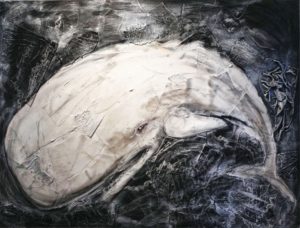
“I am half way in the work . . . It will be a strange sort of book, tho’, I fear; blubber is blubber you know; tho’ you might get oil out of it, the poetry runs as hard as sap from a frozen maple tree;—and to cool the thing up, one must needs throw in a little fancy, which from the nature of the thing, must be ungainly as the gambols of the whales themselves. Yet I mean to give the truth of the thing, spite of this.”
Herman Melville
First published in 1851, Moby Dick ranks on almost any list as one of the greatest works in the English language. Its three famous opening words ‘Call me Ishmael . . .’ together with the image of the one-legged Captain Ahab in mad pursuit of the great white whale, have become cultural icons. This grand—and occasionally grandiose—adventure tale unites the many voices of Herman Melville in a mongrel mix of epic poetry, Shakespearean tragedy, encyclopaedic cataloguing, biblical oratory, and not a small dose of comedy. Melville presents an insightful study of obsession, madness and charismatic leadership that anticipates many of our contemporary conversations about democracy, cosmopolitanism, capitalism and environmentalism.
In 2019, commemoration of the 200th year since Herman Melville’s birth generated rich responses and reconsiderations of this truly amazing book. Philip Hoare (mentioned below as one of the curators of the Moby Dick Big Read project) writes on its contemporary resonance in his article Subversive, queer and terrifyingly relevant: Six reasons why Moby Dick is the novel for our times.
“The book features gay marriage, hits out at slavery and imperialism and predicts the climate crisis – 200 years after the birth of its author, Herman Melville, it has never been more important.”
Philip Hoare
Together, artist Angela Cockayne and writer Philip Hoare convened and curated a unique whale symposium and exhibition at Peninsula Arts, the dedicated contemporary art space at Plymouth University. This grew into an extraordinary compilation of art and voices (Tilda Swinton, Stephen Fry and more) – the Moby Dick Big Read – inspiring and inspired by this vast book.
Read Toby’s blog post about Moby Dick Afloat! in 2026.
SALON DETAILS:
- Five two-hour meetings online, followed by six-day study with six nights on board the Eda Frandsen from 3.00pm on Monday 13 September 2026 to 9.00am on Sunday 19 September 2027.
- Five online meetings (on Zoom) Wednesdays 5.30-7.30 pm (UK) in advance of departure, dates to be confirmed.
- Facilitated by Toby Brothers, Salon Director
- Recommended edition: Moby Dick (Norton Critical Edition, Third Edition 2018), by Herman Melville, edited by Herschel Parker; W.W. Norton & Co. ISBN-13: 978-0393285000
- Cost for four online meetings and six-night voyage with study sessions, including opening notes will be £2,180.00 per person (£1,680 to cover the cost of sailing on the Eda Frandsen + £500 for the literary study).
- Participants will be responsible for arranging their own travel to and from our departure and end point, the port of Oban on the west coast of the Scottish Highlands, as well as insurance to cover their trip.
- We have just seven places available. If you are interested in joining, please email us using the subject line Moby Dick 2027 giving your name and a phone number on which we may contact you.
- Please note that the voyage will involve sharing confined living and sleeping space while onboard. We do not require you to have nautical skills, but some time spent on sailing boats or camping would be useful so you know what to expect. We ask you to let us know in your email whether you have such experience and to confirm that you are in good physical health.
- It is always possible that there may be rough seas and weather, so please consider carefully whether you are likely to be adversely affected by these conditions.
- If we are able to offer you a place we will ask for an initial deposit of £100 per person, with the balance due by 31 December 2026.
Organizer
Time
Location
Oban
Book this Salon
£100 REGISTRATION FEE, THE BALANCE OF £2,080.00 WILL BE PAYABLE BY BANK TRANSFER NO LATER THAN 31 DECEMBER 2026