This is a repeating event12 May 2022 3:00 pm26 May 2022 3:00 pm
Myths of the Greek Gods: the original stories from Aeschylus, Hesiod and the Homeric Hymns
Event Details
SALON DETAILS:
- Facilitated by Mark Cwik
- Nine-meeting virtual study via Zoom, Thursday afternoons, 3.00-5.15 pm, 28 April – 30 June 2022
- £220 for nine meetings, including notes and resources
- Recommended editions:
The Poems of Hesiod: Theogony, Works and Days, and the Shield of Herakles, translated by Barry B. Powell, (University of California Press, 2017), ISBN-13: 978-0520292864
Prometheus Bound, by Aeschylus, translated by Deborah H. Roberts (Hackett, 2012), ISBN-13: 978-1603841900
The Homeric Hymns, translated by Apostolos N. Athanassakis, (Johns Hopkins University Press, 3rd edition, 2020), ISBN-13: 978-1421438603
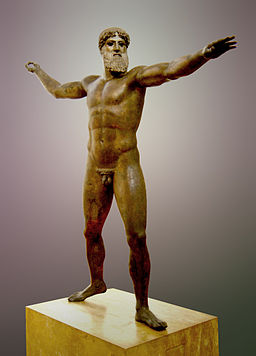
Ancient Greek literature and art portrays a world filled with heroes and heroines, nymphs and satyrs, giants and monsters — and, above all, by gods. Who were these divine beings? What did the gods mean to the Greeks? What was it like to live in a world ruled by them? Did the Greeks really believe all the stories they told about their gods?
In this study, we’ll turn to some of our oldest written sources to see how the Greeks talked about these super-human beings with big passions, fearsome powers — and lots of time on their hands.
The poems of Hesiod, from the 8th century BCE, were as well-known and influential as those of his near-contemporary Homer. His Theogony tells of the origins, relationships, and battles among three generations of Greek gods. It describes the great war between Titans and Olympians that led to the ascendancy of the latter under the reign of the mighty Zeus. Hesiod’s Works and Days shows a different side of this ruler of the Olympians, as a god who oversees justice and right action among mortals.
The Homeric Hymns recount in beautiful verse some of the best-known tales of Demeter, Persephone, Apollo, Aphrodite and Hermes. And Aeschylus’ Prometheus Bound dramatises the punishment of the rebel Titan Prometheus, who disobeys Zeus and brings fire and learning to mortals.
If you have any questions about this study, please contact the facilitator, Mark Cwik.