Jacob's Room by Virginia Woolf (for Nicole)
Event Details
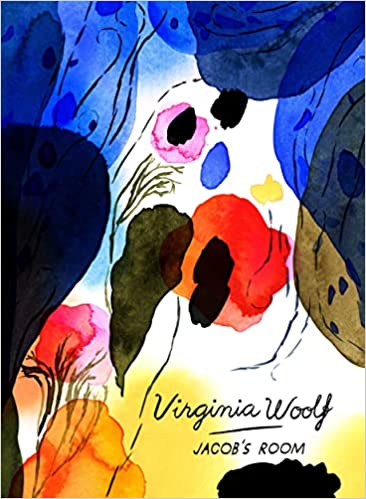
This is our first Virginia Woolf study in East Sussex, a county which in many ways became the writer’s spiritual home.
As one of the key members of the celebrated Bloomsbury Group, Woolf is often seen as a London writer, but she and her husband Leonard had an abiding love for the South Downs. Together they purchased Monk’s House near Rodmell in 1919 and used it as their writer’s retreat. Virginia wrote some of her major works there and the Sussex landscape was integral to her writing as she tried to capture what she saw as its unsurpassable beauty. There are a number of other Bloomsbury outposts in the area: in 1916 Virginia’s sister, Vanessa Bell, moved to Charleston Farmhouse with the painter Duncan Grant, while John Maynard Keynes and his wife Lydia Lopokova also settled locally.
Jacob’s Room, Virginia Woolf’s third novel, was the first to be published by the Woolfs’ own imprint, the Hogarth Press. Published in 1922, this book is the linchpin between the more traditional novel form and Woolf’s leap forward into the modernist mode. She lets go of event and character development to make room for the intensity of living — that incredible burning that may look from one angle like inconsequence, but from another angle the very heart of being.
This was also the form she chose to address the unimaginable moment of war — ripping into the heat of life and leaving only gaping space where a beloved son had been. Her decision not to narrate the war and the resultant deaths directly, but to use her art to demonstrate the gashed web of connection that is left behind, was controversial for her contemporary audience. How do we narrate the unliveable events that circumscribe our identity in the historical moment? This is in part what Woolf responds to – not philosophically, but aesthetically.
Woolf is also engaging the question she will pursue through all of her literature: how do we know each other? How do the various planes of personality, the glimpses of each other’s interior, add up to an authentic being?
“. . . having this afternoon arrived at some idea of a new form for a new novel. Suppose one thing should open out of another . . . only not for 10 pages but 200 or so–doesn’t that give the looseness and lightness I want; doesn’t that get closer and yet keep form and speed, and enclose everything, everything? My doubt is how far it will enclose the human heart–Am I sufficiently mistress of my dialogue to net it there? For I figure that the approach will be entirely different this time: no scaffolding; scarcely a brick to be seen; all crepuscular, but the heart, the passion, humour, everything as bright as fire in the mist. Then I’ll find room for so much—a gaiety–an inconsequence – a light spirited stepping at my sweet will. Whether I’m sufficiently mistress of things – that’s the doubt; but conceive ‘Mark on the Wall ‘, ‘Kew Gardens’ and Unwritten Novel taking hands and dancing in unity. What the unity shall be I have yet to discover; the theme is a blank to me . . .”
Virginia Woolf, A Writer’s Diary, 26 January 1920
SALON DETAILS:
- Facilitated by Toby Brothers
- This will be the first Salon study based in East Sussex, providing an opportunity to enjoy the locale as well as joining with other readers in discussing Jacob’s Room and its relationship to Woolf’s other works.
- £280 for five two-hour sessions over three days (plus accommodation, please see below)
- We will stay at Deans Place, a family-run four-star country hotel with gorgeous views, an extensive garden, and comfortable meeting rooms. Set on the banks of the Cuckmere River, it is perfectly located for exploring Alfriston and the South Downs. Salonistas have stayed there many times and report that its location and proximity to sites associated with Bloomsbury make it the perfect choice for Woolf-related Salons. The cost for three nights stay, including (delicious and generous) breakfast and dinner, will be £523 per person. Participants are responsible for booking their own accommodation.
- Recommended edition: Jacob’s Room by Virginia Woolf, Vintage Classics, ISBN-13: 978-1784877958